
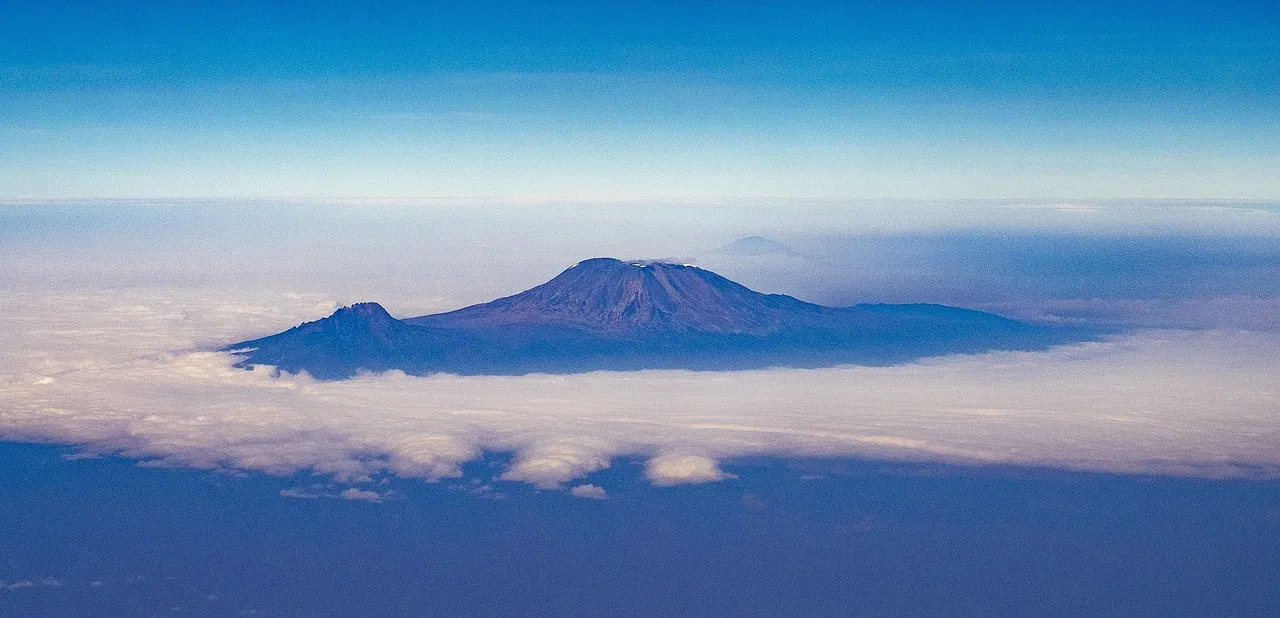
The Whiskey Route
Machame Route
Five climate zones, one famous wall, and a smart climb-high-sleep-low rhythm.
- Duration
- 6 or 7 days
- Distance
- 62 km / 39 mi
- Summit
- 5,895 m / 19,341 ft
- Start gate
- Machame Gate (1,800 m)
- Finish gate
- Mweka Gate (1,640 m)
- Sleeping
- Four-season tents at every camp
- Difficulty
- Demanding but non-technical; steady walking with one hands-on scramble
- Summit success
- Strong on a seven-day climb, and better with an extra day to adjust to altitude. Industry estimates vary, so we do not quote a single figure.
- From
- $2,200 per person
- Best months
- Jan, Feb, Jun, Jul, Aug, Sep, Oct
The route
Five climate zones, one famous wall, and a smart climb-high-sleep-low rhythm.
No trail on Kilimanjaro sees more climbers reach the top than Machame. It is neither the gentlest line up the mountain nor the quickest, yet it hands you a full tour of the volcano: steamy rainforest, heather moorland, the wide Shira Plateau, a stony alpine desert and finally the glacier-draped summit zone.
The nickname is a nod to the effort involved. Where the Marangu trail has earned the label of the easier road, Machame asks for tents, longer days and a few steep scrambles, and pays that back with a far more varied landscape. Standing on Uhuru Peak at 5,895 m, you will know exactly how you got there.
Our standard plan runs seven days, which spreads the Barranco Wall, the Karanga Valley and the climb to high camp over two separate days. A tighter six-day version exists for people who have recently spent time at altitude or who are very fit: it folds those stretches into one long push to Barafu, leaving less time for the body to adapt. Whichever you pick, fitness work beforehand counts for more than the number of days.
Expect a trail that is busy in peak months, a route that is walked on foot from first step to last, and no technical climbing at all. The Barranco Wall needs hands, a steady head and a little patience, nothing more.
- A rainforest start where colobus monkeys move through the canopy above the trail
- Lava Tower at about 4,630 m, a detour that sets up the climb-high-sleep-low acclimatisation pattern
- The Barranco Wall, a 300 m scramble that looks far steeper than it climbs
- Open views across the Shira Plateau toward the glaciers of Kibo
- Sunrise from Stella Point at 5,739 m, with the Indian Ocean light spreading below
- Uhuru Peak at 5,895 m, the highest point in Africa
Day by day
The climb, day by day
Day 1
Machame Gate to Machame Camp
Machame Camp
The trail leaves the gate and drops straight into dense rainforest, climbing steadily beneath tall trees where colobus monkeys swing overhead. By late afternoon you reach a camp on a moorland ridge above the tree line. It is the longest opening day of any standard Kilimanjaro route, about five to seven hours on foot, so pace yourself and drink plenty.
Gaiters and poles earn their place here; the forest floor can be slick and muddy.
- 11 km / 7 mi
- 3,026 m / 9,928 ft
- Meals
- Lunch, dinner
Day 2
Machame Camp to Shira Camp
Shira Camp
The forest thins out, giving way to heather and wide moorland, and the Shira Plateau opens in front of you: broad, windy and old. Kibo's glaciated summit shows on the horizon. This is a shorter walk of four to six hours, and a mild headache that evening is normal at this height.
- 5 km / 3 mi
- 3,766 m / 12,356 ft
- Meals
- Breakfast, lunch, dinner
Day 3
Shira Camp via Lava Tower to Barranco Camp
Barranco Camp
The key acclimatisation day of the trek. You climb to Lava Tower at roughly 4,630 m, then lose nearly 700 m of height down to Barranco Camp, where the great wall rises above the tents. Allow six to eight hours. Appetite often dips and headaches show up today, so tell your guide early if anything feels off.
Sleeping lower than you climbed is the whole point: lean on the descent, it is doing the work.
- 10 km / 6 mi
- 3,983 m / 13,068 ft
- Meals
- Breakfast, lunch, dinner
Day 4
Barranco Wall to Karanga Camp
Karanga Camp
First comes the Barranco Wall, a 300 m scramble using hands and feet that has become one of the mountain's signature moments. The afternoon crosses the Karanga Valley, where the last dependable water on the mountain flows. Four to five hours in total, and most people feel their energy return after the altitude dip of Day 3.
- 5 km / 3 mi
- 3,995 m / 13,107 ft
- Meals
- Breakfast, lunch, dinner
Day 5
Karanga Camp to Barafu Camp
Barafu Camp
The shortest walk of the expedition, three to four hours through alpine desert up to Barafu, the main high camp. Your guide runs the summit briefing, you eat, rest and try to sleep, and the wake-up call comes around midnight. Nerves and restlessness are completely normal.
Eat the full dinner even if your appetite is low; summit night burns through everything.
- 4 km / 2 mi
- 4,673 m / 15,331 ft
- Meals
- Breakfast, lunch, dinner
Day 6
Summit night: Uhuru Peak and down to Mweka Camp
Mweka Camp
Starting in the dark at a deliberately slow pole-pole pace, you climb to Stella Point (5,739 m) as the first light reaches over the Indian Ocean, then continue about 45 minutes to Uhuru Peak. After the summit photographs the long descent carries on past Barafu all the way to Mweka Camp. Plan on ten to fourteen hours of movement; about 5 km up and 12 km down.
- 17 km / 11 mi
- 3,110 m / 10,203 ft
- Meals
- Breakfast, lunch, dinner
Day 7
Mweka Camp to Mweka Gate
Mweka Gate
A final three to four hours through the rainforest brings you to Mweka Gate, where your summit certificate is handed over. A driver is waiting to take you back to your hotel.
- 10 km / 6 mi
- 1,640 m / 5,381 ft
- Meals
- Breakfast
Gallery
On the mountain
Photo credits: Jorge Láscar from Australia, CC BY 2.0 via Wikimedia Commons.
What's included
- Kilimanjaro National Park entry, camping and rescue fees, plus the conservation levy
- A lead mountain guide who speaks English, with one assistant guide for every three trekkers
- One porter per trekker, carrying a duffel capped at 15 kg
- A mountain cook preparing hot meals at every camp, full board throughout
- Four-season sleeping tents, foam mats, a dining tent, a kitchen tent and a private toilet tent
- Emergency bottled oxygen carried with the team
- Pulse oximeter checks morning and evening at each camp
- A guide trained in wilderness first response
- Airport and hotel transfers, and the drive to and from the trailhead
- Summit certificate for everyone who reaches the top
- VAT and all Tanzanian taxes that apply
Not included
- International flights
- Tanzania entry visa
- Personal travel and medical insurance (compulsory for this trek)
- Personal trekking gear and clothing
- Gratuities for the mountain crew
Pricing
Price per person
The more climbers who share the crew and park costs, the lower the price for each. Prices are in US dollars.
Solo climber
$2,545
per person
Small group (2 to 4)
$2,345
per person
Group (5 or more)
$2,200
per person
Prices are per person and cover what is listed under what is included. Park fees are set by the authorities and can change, so the quote you accept is the price that applies. Gratuities and personal gear are not included.
Free guide
The Kilimanjaro Route Guide
Every route compared: distances, gates, camps, altitudes and the best months, in metric and imperial.
6
Routes compared
43
Daily stages mapped
5,895 m
Uhuru Peak (19,341 ft)
What is inside
- Every route side by side: days, distance, start and finish gates, and where you sleep
- A day-by-day table for each route with elevation and distance, in metric and imperial
- The best months to climb, shown as a month strip for every route
- What a climb typically includes, and what to ask any operator
- Straight answers to the questions climbers ask most
Who it is for. Anyone weighing up a Kilimanjaro climb who wants to compare the routes properly before choosing one.
- Free PDF, sent to your inbox
- Distances in metric and imperial
Questions
Good to know
The name sets it against the Marangu trail, known as the Coca-Cola Route. Machame is the stronger, more demanding drink: you sleep in tents rather than huts, the days are longer and the scenery is wilder.
Seven is the better pick for most people, including first-timers, because the Barranco Wall, Karanga Valley and ascent to Barafu are spread over two days. The six-day version suits those with recent altitude experience and strong fitness, and it comes with a somewhat lower chance of summiting.
None. Machame is a walking route throughout. The Barranco Wall needs your hands for balance but involves no ropes or climbing gear.
The two dry windows are late June to October and January to February. Skies are clearer and the trail is firmer in those months, though they are also the busiest.
You sleep in four-season tents, with foam mats provided. The crew also puts up a dining tent, a kitchen tent and a private toilet tent at each camp.
Yes. Plenty of climbers pair the mountain with a wildlife safari or a few days on the coast, either before or after the trek.
Climb Machame Route
Tell us your dates and fitness, and we will recommend the route and pace that suit you.