
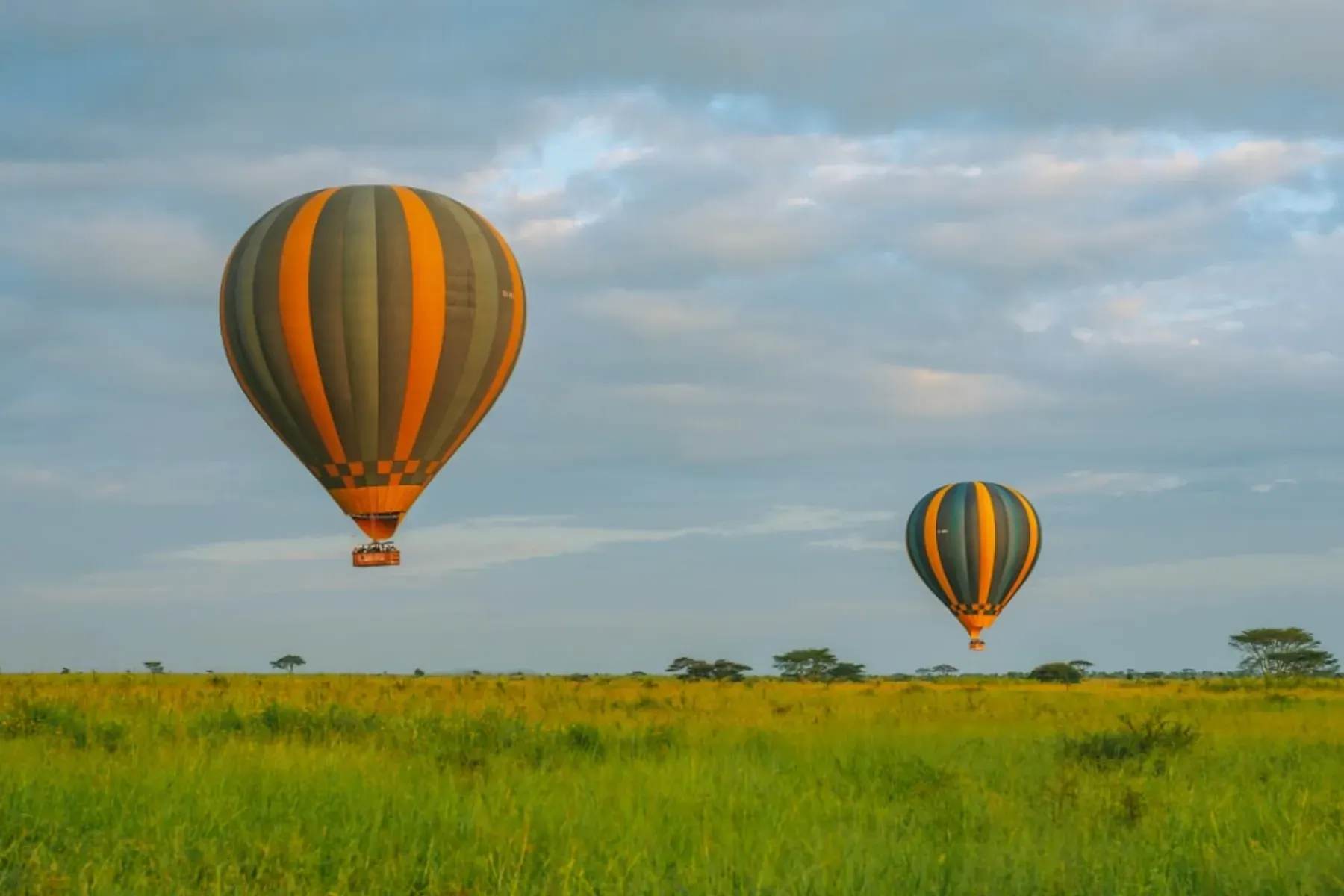
Aerial safari
Serengeti Balloon Flight
Rise with the sun and watch the plains wake from above
- Duration
- Half-day add-on
- Location
- Serengeti National Park
- Season
- Flies year-round, weather permitting
- From
- $650 per person
The experience
Rise with the sun and watch the plains wake from above
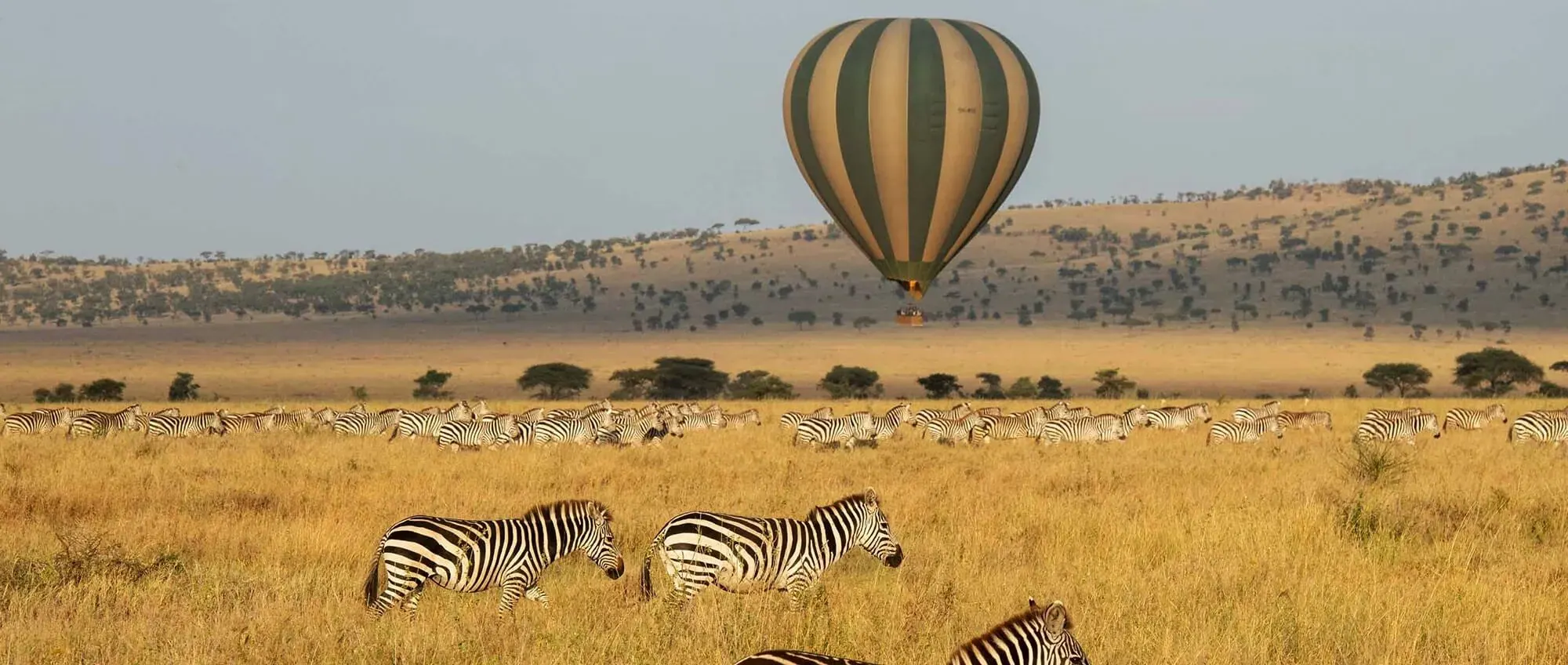
Lift off from a dawn airstrip and glide in silence above acacia, kopje and open grassland, with herds, rivers and horizon laid out beneath you. About an hour in the air ends with a bush breakfast and a toast in the grass.
- Sunrise flight over the Serengeti
- Sparkling-wine bush breakfast on landing
- Flight certificate
- Can be added to any safari
What surprises most people is the quiet. You expect noise from flight, but once the burners fall silent a few hundred feet above the Serengeti, the stillness is complete. Then it fills in again: zebras barking below, a hyena somewhere out of sight. The biggest landscape in Africa supplies its own soundtrack while you drift across it.
A balloon flight is the shortest activity you can add to a safari and, minute for minute, the one people discuss longest at dinner. Was it worth it? Nearly everyone decides it was. Below you will find the shape of the morning, the seasons and places flights operate, and the people who might want to reconsider.
The flight itself
A licensed commercial pilot flies a passenger balloon at sunrise for roughly an hour, depending on the wind. You drift anywhere from treetop height, low enough to meet a giraffe almost at eye level, up to a few hundred metres, where the ecosystem finally makes visual sense: herds like brushstrokes, rivers like silver thread, the plains running on beyond the light.
The wind chooses the route, and the pilot can only steer by seeking out air streams that flow in other directions at varying altitudes. No two flights cover the same ground, which is part of the appeal. You land wherever the morning leads, and then comes the tradition the whole outing is known for: a full breakfast laid out in the grass with sparkling wine, a custom handed down from early ballooning.
Why it has such a following
**Nothing else shows you the park from above.** Drones are practically prohibited inside the national parks, and fixed-wing sightseeing flights never hover. The balloon gives the one aerial perspective on offer, and that perspective is the point: the real scale of the migration simply cannot be grasped from the ground.
**It makes extraordinary photographs.** Warm light, long shadows, herds breaking into patterns below, and other balloons glowing against the sunrise, which end up in many guests' favourite frames. It is also a favourite surprise for couples on honeymoon.
**It costs little of your safari.** The flight replaces the first ninety minutes or so of a game drive, not a whole day. By mid-morning you normally meet your guide again, having already eaten.
Which months
Jan to Dec
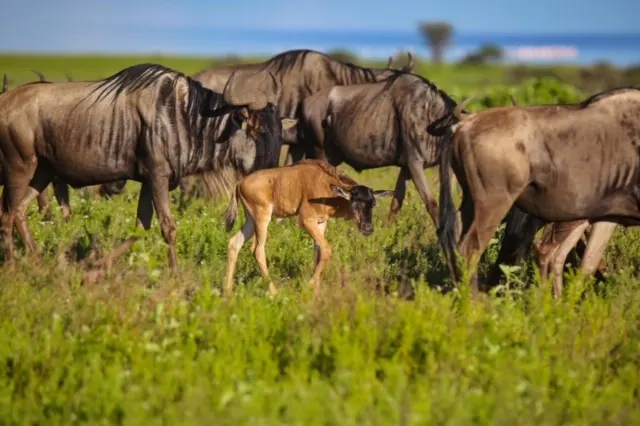
Balloons fly all year, so the best month is really the month you are already in; let the flight follow the safari and not the reverse. That said, **June to October** gives the clearest air and, in the north, migration herds. **January to March** puts the vast calving gatherings of the south beneath your basket, which may be the finest thing to float over.
**April and May** are the trade-off, because storms and gusts scrub a larger share of departures. A grounded flight is moved to another day or paid back, so you do not pay for a flight that never happens, though a second dawn is not guaranteed. Launch sites also differ: central Serengeti runs year-round and seasonal sites follow the migration, so your camp decides whether the launch is five minutes or ninety minutes away. Our team looks into it while shaping your route.
The morning, hour by hour
4:45 AM
Pick-up in the dark
A transfer from camp to the launch site, with headlights now and then catching night animals heading home.
5:45 AM
Inflation and briefing
The balloon swells and glows like a lantern in the half-light. After a safety briefing you climb into the basket, which is often laid on its side.
6:15 AM
Lift-off at sunrise
The ground lets go. An hour of drifting, low over rivers or high above the plains, with burners roaring and then perfect quiet.
7:30 AM
Landing and breakfast
A bump, a tip, plenty of laughter. Tables appear in the grass with a cooked breakfast, sparkling wine and a flight certificate.
9:30 AM
Back to the game drive
Your guide collects you and the safari carries on, with the best story of the day already in the bag.
What the price covers
The balloon is a fixed-price add-on with little small print. Here is what sits behind the figure.
- **The whole half-day:** camp pick-up, the flight (about an hour, winds permitting), the bush breakfast and the transfer back to your guide.
- **A shared basket:** baskets seat groups in compartments, so it is a sociable outing. Private charters exist at a very different cost; ask if that matters to you.
- **Weather cover:** should wind or rain ground the flight, you get a new date or your money back. Whatever the captain decides stands, and that is how you want it.
- **The hidden cost is sleep:** pick-ups run before 5 AM. A night at a camp in the middle of the Serengeti beforehand takes the sting out of the early alarm.
Included
- Camp pick-up and return transfer
- About one hour in the air with a licensed pilot
- Bush breakfast with sparkling wine
- Flight certificate
Not included
- Park fees (covered within your safari)
- Tips for the balloon crew
- Private-basket upgrade
- Anything paid for a cancelled flight, which is refunded or rebooked
What to wear and carry
Layers do the work. It is properly cold before dawn at altitude, the burner overhead is warm, and an hour later the breakfast table sits in full sun. Choose flat, closed footwear for the rough touchdown, stow your hat in a pocket, and strap your camera to yourself. Anything dropped over the side is gone.
- A warm top that comes off once the sun is up
- Flat, closed shoes
- Camera with strap attached
- Sunglasses for sunrise glare
- Hat, kept in a pocket until landing
- A little cash for crew tips
Gallery
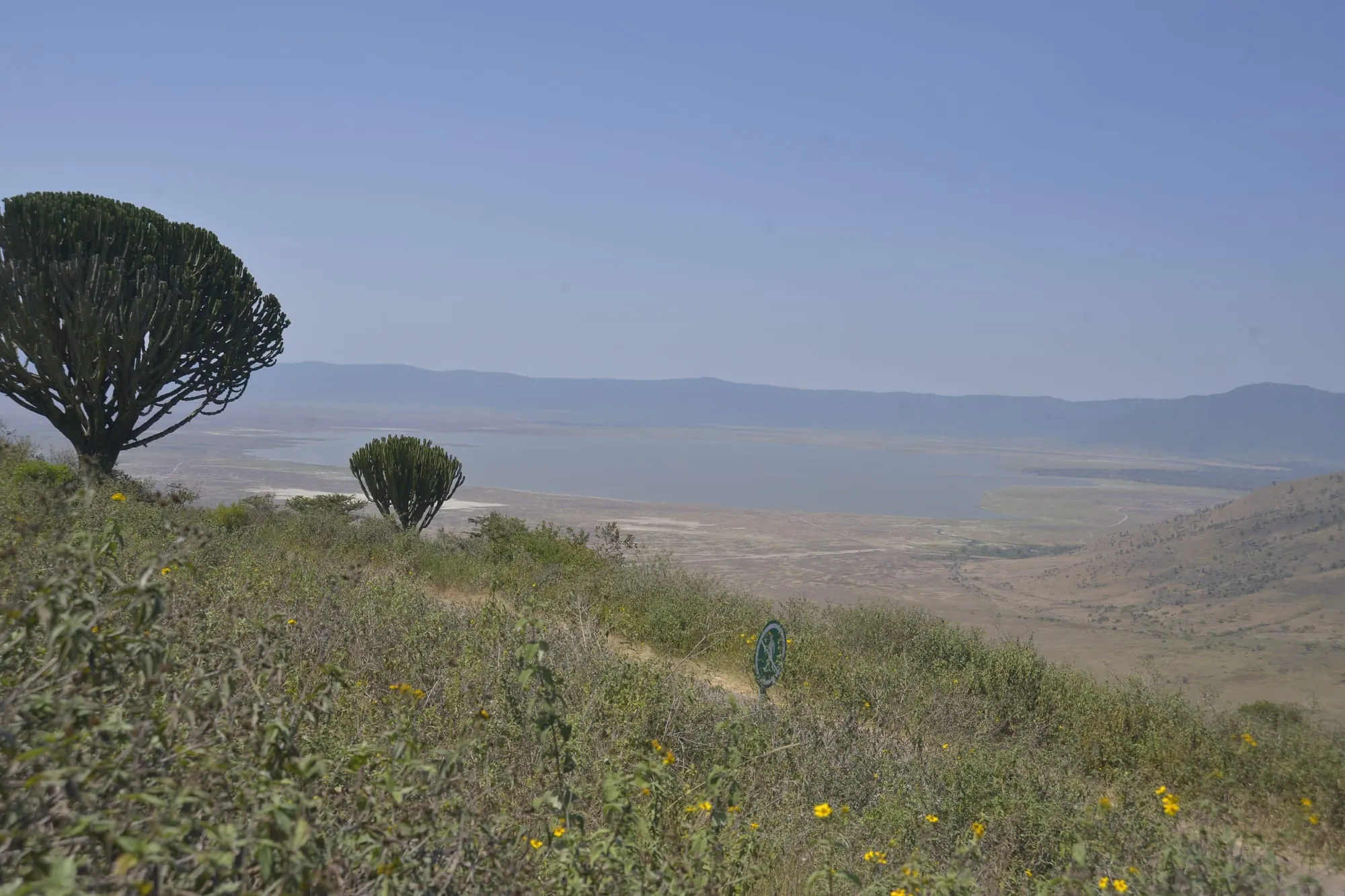
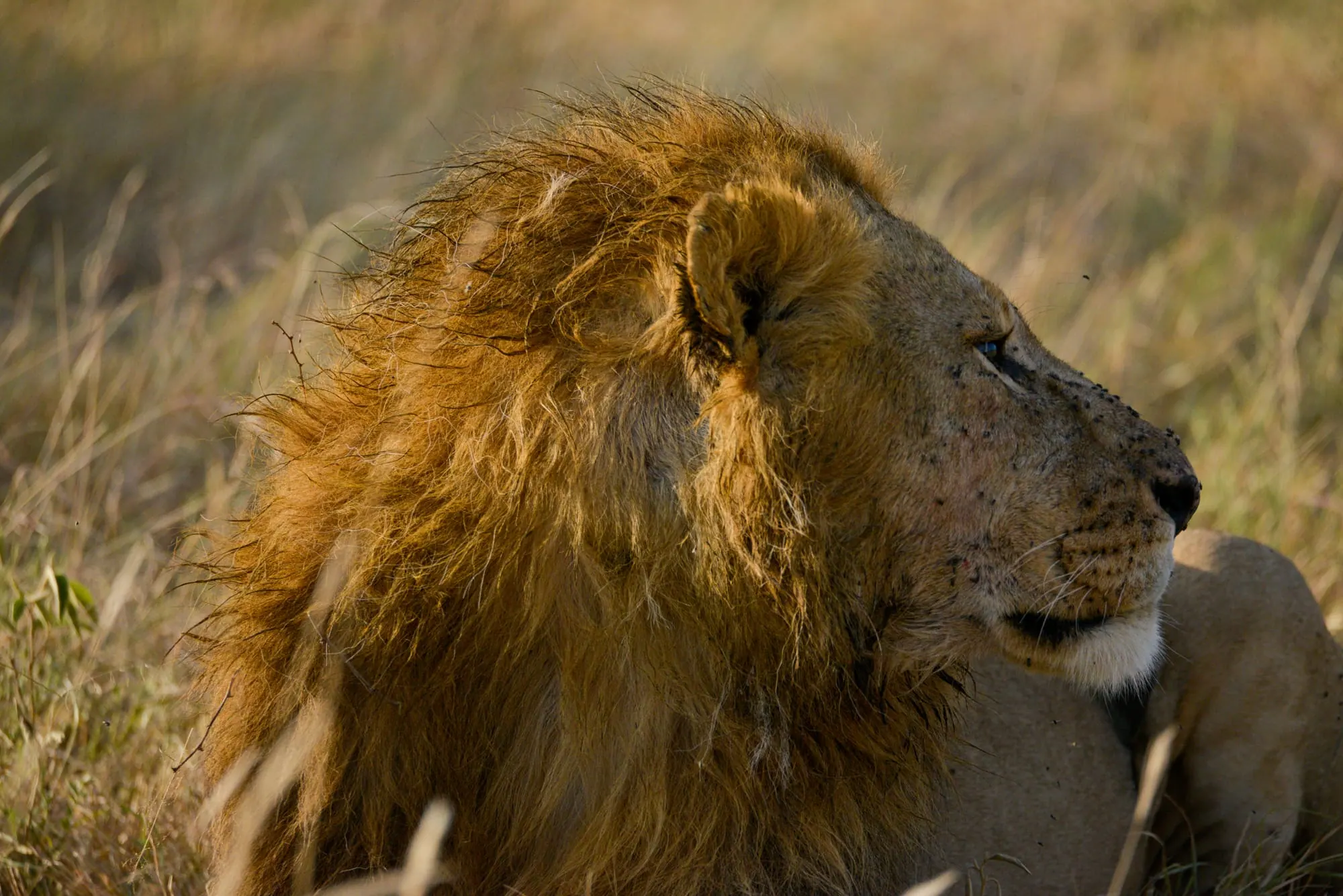
In pictures
Questions
Good to know
For most people, yes, though not for everyone. Nothing else gives you the Serengeti from above, the breakfast is a real production, and guests often name it among their top memories. On a tight budget, however, an extra day of game drives gives more wildlife for the money. Treat the balloon as the treat it is.
If herds are within reach of a launch site, pilots aim for them, and flying above the migration is the high point of the format. But balloons follow the wind and herds move daily, so no one can promise it. Staying near the herds in season gives the best odds.
Flights are run by licensed commercial pilots under civil aviation rules, with firm wind limits and a go or no-go decision each morning. A cancellation means the safety system is working. When the air is moving, touchdown may be a jolt and a short slide. The pre-flight talk teaches the brace posture, and wearing flat footwear is up to you.
Operators typically ask that passengers be about 7 or older, and a child must stand high enough to look past the rim of the basket. Expectant mothers and anyone recovering from hip, back or knee surgery are normally advised against flying, and getting in and out of the basket takes some mobility. We confirm current operator rules at the time of booking.
The pilot decides at dawn. If it is a no, you are shifted to the next open morning if your schedule has room, otherwise the full amount comes back to you. That is also a good reason to schedule the balloon early in your Serengeti stay instead of on the last morning.
Hardly. What you lose is about ninety minutes at the start of a single morning; around 9:30 your guide collects you, and you have already breakfasted. Many guests say the drive afterwards feels like a bonus round.
The flight is about an hour, depending on the wind. The full experience is a half-day: collection at about 4:45 AM, then the balloon filling and safety talk, the flight at sunrise, breakfast in the bush, and handover to your guide at roughly 9:30 AM.
Serengeti Balloon Flight
Add it to a safari or build a trip around it. We will take care of the details.