
Migration Safari
Following the Wildebeest Migration
A moving sea of animals, and a trip timed to meet it
- Duration
- 6 to 10 days
- Location
- Serengeti ecosystem, Tanzania
- Season
- Year-round, because the herds are always somewhere
- From
- $4,200 per person
The experience
A moving sea of animals, and a trip timed to meet it
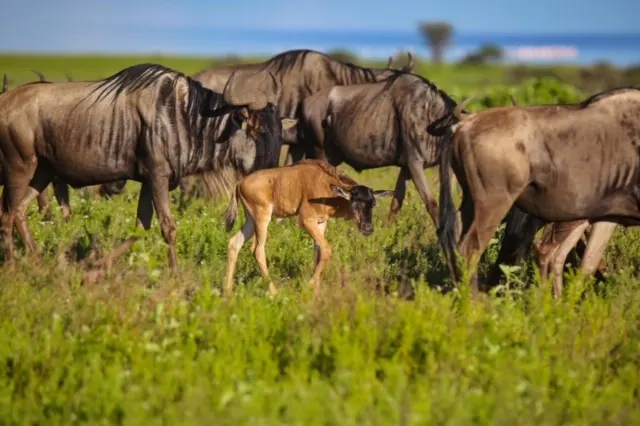
Well over a million wildebeest, with zebra and gazelle alongside, loop around the Serengeti ecosystem all year. We build the journey around where they are in your travel week, from the calving plains to the Mara River.
- River crossings in the northern Serengeti, July to October
- Newborn calves and daily hunts on the Ndutu plains
- Mobile camps that sit beside the herds
- A month-by-month plan for where the animals are
The sound arrives first: a deep, rolling grunt made of countless voices, drifting over the plain like an approaching storm. Climb a low rise and the grass appears to be walking. Wildebeest fill every direction, moving with the steady single purpose of animals obeying something far older than memory.
This is the biggest overland movement of animals anywhere on Earth. More than 1.5 million wildebeest, accompanied by large numbers of zebra and gazelle, circle the Serengeti and Mara ecosystem in a loop with no beginning and no end. Because the herds are always somewhere, the whole craft of a migration safari is to be in the right corner of the ecosystem during your week.
How a migration trip differs
Game drives remain the format, yet the route trails the animals instead of ticking off a stock list of parks. Nights are not split evenly; they are placed wherever the herds happen to be moving. That may mean the Ndutu plains in the south during calving season, the Western Corridor while the columns push north, or the far northern Serengeti once they mass beside the Mara River.
Camps that follow the animals move too. Mobile camps shift a few times a year to stay close, and a well-made itinerary often pairs one with a permanent lodge: the mobile tents for proximity, the lodge for comfort.
Why plan an entire trip around it
- Scale beyond any photograph: one frame holds a few thousand animals, while standing inside the herd means being surrounded by more than a million.
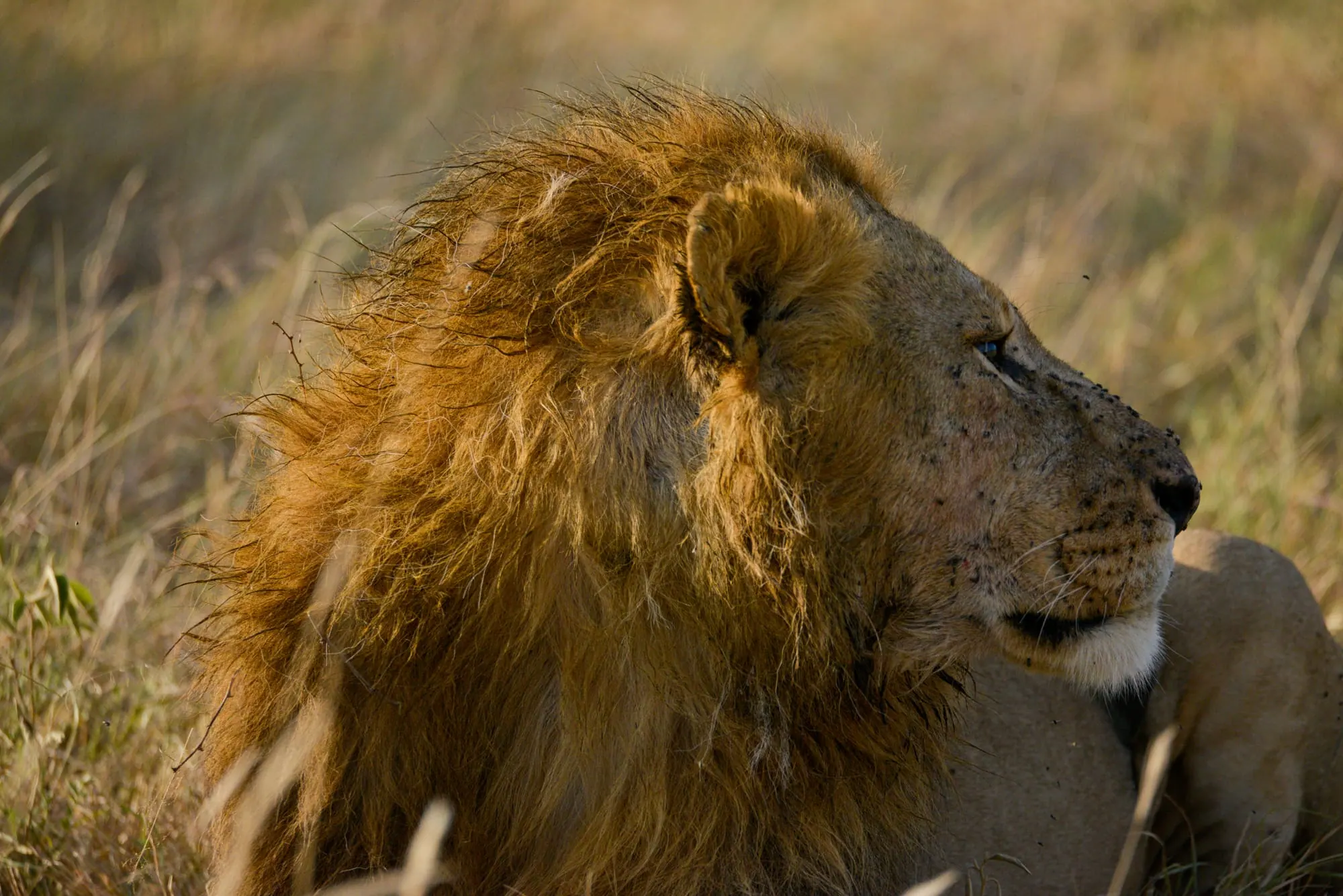
- Predators trail the herds: lion, cheetah, hyena and leopard cluster wherever the wildebeest are, which makes this quietly one of the finest big-cat safaris you can take, especially at calving time when hunts unfold in the open almost daily.
- Two different shows: calving, roughly late January to March, is green and crowded with new life, while the river crossings from about July to October are dusty, tense and dramatic. Many travellers return to see the other.
Where the herds are, month by month
Which chapter you want decides everything. The loop follows a rough yearly pattern, but the rains move it by weeks from one year to the next.
Jan to Dec
From late January to March the southern Serengeti and Ndutu host the calving. Hundreds of thousands of calves arrive within a handful of weeks on the short-grass plains, hunting is at its most intense, and the light is wonderful. The catch is occasional afternoon showers and a busy Ndutu.
July to October brings the crossings in the northern Serengeti and Masai Mara: herds backing up along the Mara River, crocodiles lying in wait, then the sudden surge into the water. It is unforgettable and entirely unpredictable. The herds may cross three times in a day or loiter for a week, so patience and a guide with a strong radio network count for more than anything else.
The months in between are far from empty. April to June sees long columns crossing the central and western Serengeti with few vehicles and gentler rates, and November to December finds the herds streaming south on the short rains. If you value uncrowded wildlife over one headline event, these windows are excellent.
How the days run
The framework is the usual safari day: early start, long morning, midday pause, afternoon drive. On crossing days, though, everything bends around the river.
5:30 AM
Out at first light
You leave camp before sunrise. At calving time, overnight hunts are often still unfolding.
7:00 AM
Locating the columns
Your guide reads tracks, listens to the radio net and places you where the animals are streaming past.
Late morning
Waiting at the bank
In crossing season the herds assemble at the water. You park, switch off the engine and wait, sometimes minutes and sometimes hours.
Afternoon
Where the action is
Crossings, predators working the herd's edge, and a million animals grazing slowly northward.
Sunset
Back among the tents
Sleeping in a mobile camp, you will frequently hear the herds grunting around your tent until morning.
What shapes the price
Final costs depend on the season, the camp type and how you travel. Lemala Safaris will confirm figures for your dates when you enquire.
- Place and month: camps in the northern Serengeti during crossing season charge the highest rates of the year and sell out furthest ahead.
- Mobile camp or lodge: tents placed on the migration route cost more than a comparable lodge further away, because you are paying for closeness.
- Flying or driving: bush flights into Kogatende or Ndutu save about half a day each way and add cost, whereas the overland option trims the price and shows you more landscape.
- Number of nights: the migration rewards time, and two or three nights in the right area beat one rushed night, particularly during crossings.
Included
- Park entrance fees
- Private guide and 4x4 vehicle
- Meals on safari
- Accommodation as specified
Not included
- International flights
- Visa fees
- Gratuities
- Travel insurance
Packing for the herds
The normal safari kit applies, with two additions: the best binoculars you can lay hands on, since the action often plays out far off, and good dust protection for cameras in the dry months. For calving season, bring a warm layer, because mornings on the short-grass plains are chilly.
- Good binoculars
- Dust-proof camera bag
- Neutral-coloured clothing
- Warm fleece for early drives
- Light rain jacket
- Spare batteries and memory cards
Gallery
In pictures
Questions
Good to know
No honest operator can promise it, because the herds cross when they decide to. Your odds improve with a number of nights close to the river during the busiest weeks, a guide tied into the network of sighting reports, and room in the plan to sit at the bank once a build-up begins.
They are different journeys. Calving is concentrated, green and rich in predators, with the herds packed on the southern plains. Crossings are more iconic but less predictable and involve more waiting. If you want intensity per hour, calving often wins; if you want the famous image, choose the river.
Broadly, they graze the southern Serengeti and Ndutu from December to March, pass through the central and western Serengeti between April and June, occupy the north and the Masai Mara from July to October, and trickle south again in November. Rain shifts the dates each year, which is why the plan is confirmed close to departure.
Both can work. Mobile camps stay closest to the herds, shifting as they do, while lodges give extra comfort and frequently cost less, though the action may lie further from the gate. Plenty of migration itineraries pair one of each.
Most of the yearly loop takes place on the Tanzanian side. The herds spend part of the dry season across the border, and crossings occur on both sides of the river, but a Tanzania-based plan covers nearly every phase.
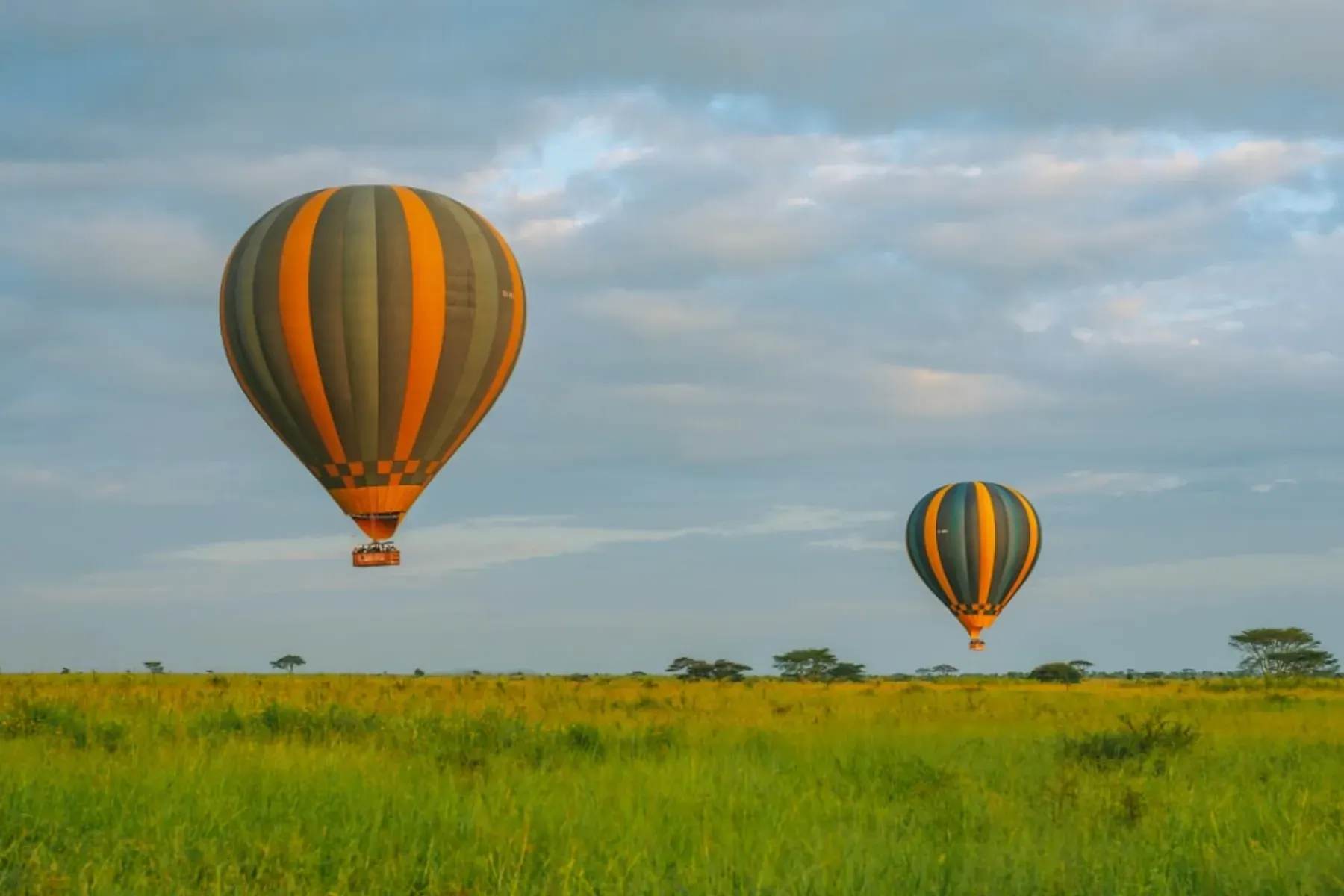
A hot air balloon flight above the herds is the classic extra. Zanzibar, Ngorongoro Crater and Tarangire all join easily to a migration itinerary.
River crossings peak, on the numbers, in the northern Serengeti during August and September, whereas Ndutu in February is tough to top for calving. Herds are somewhere every month, so the best time hinges on which chapter you want.
It depends on whether you follow the northern crossings or the southern calving grounds, on the nights you spend and on whether you fly. Park fees, guiding, meals and accommodation are typically part of the price. Ask Lemala Safaris for a quote for your dates.
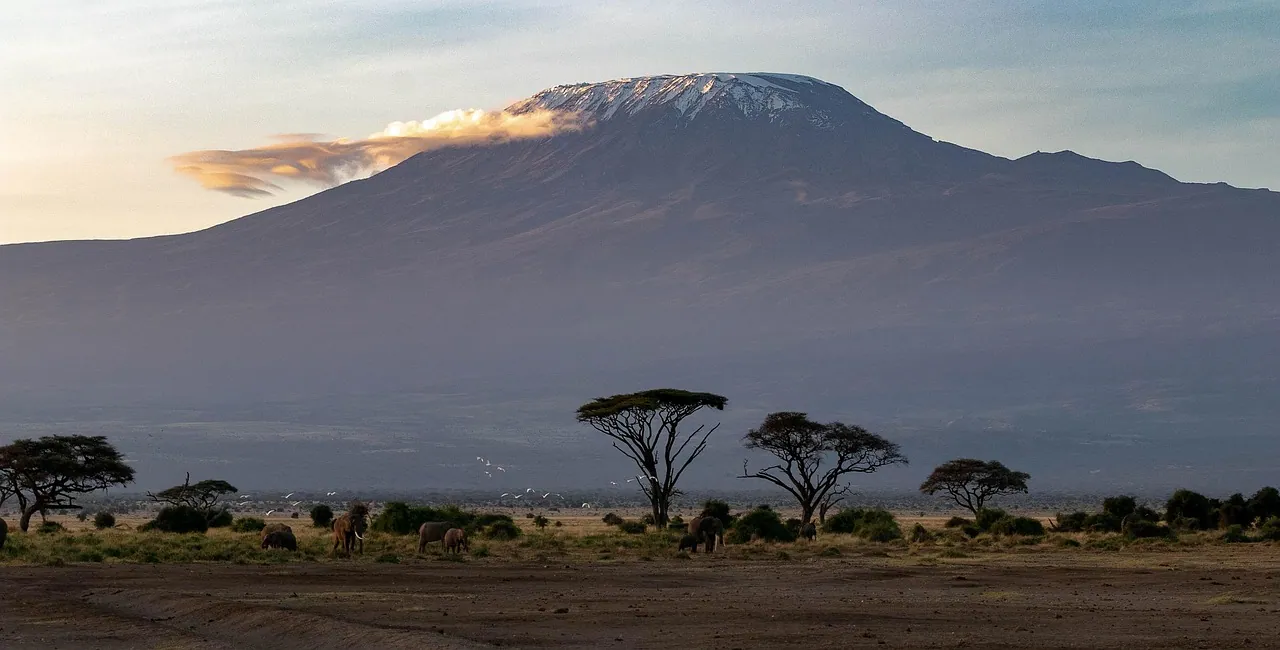
Following the Wildebeest Migration
Add it to a safari or build a trip around it. We will take care of the details.