01
Why there is no single answer
People often open a conversation with one question: how much does a Tanzania safari cost? It is a fair thing to ask, and it is also the question that has the least useful short answer. Two guests can both say they are going on a week-long safari and end up with trips that differ enormously in price, because the word safari covers an entire range of choices rather than one product.
Think of the price as a stack of layers. At the bottom sit fixed charges that nobody negotiates, such as the fees paid to the parks. On top of those go the choices you make: where you sleep, how you travel between parks, how many people share the vehicle and how many days you stay. Understanding each layer is the best way to see what affects the price of a safari and to make sense of Tanzania safari cost, and it lets you decide where the money should go.
This guide walks through those layers one by one and deliberately uses no figures. Prices change with the season, with the exact dates inside a season and with the authorities that set park charges, so any number we printed would age quickly. What does not change is the logic, and once you know the logic you can read any quote from any operator with confidence.
02
Park fees and conservation area fees
The largest single component for most visitors is the money paid to the authorities that protect the land. Every person who enters a national park pays national park fees for each day inside, and the same is true in a conservation area such as Ngorongoro, where conservation area fees apply. These charges are set by the government bodies in charge, not by tour operators, and they are charged per person per day.
Because they are fixed outside the operator's control, park fees are the part of a quote that cannot be softened by haggling. They also explain why a safari that spends more days in the Serengeti or the crater costs more than one that spends the same days in a quieter park. The government authorities can change these charges at short notice, which is why our own itineraries say so plainly in their notes.
There are additional small charges that surprise first-time travellers: vehicle entry, guide and camping fees where relevant, and in some places a separate fee for concession areas outside park boundaries. A good quote folds all of this into one line you can understand. If an operator's price seems far lower than the others, check whether park entry fees are actually included before you celebrate.
- Charged per person per day, so a longer stay or a larger group raises this layer in direct proportion.
- Set by the authorities, so every honest operator pays the same for the same park on the same day.
- Children are charged differently from adults in many cases, so give ages when you request a quote.
03
Where you sleep: Trail, Ridge and Summit
After park fees, the choice with the greatest effect on the total is accommodation. We group the partner stays we book into three collections so that guests can compare like with like. Trail is the great value collection, with comfortable, clean rooms or tents and friendly camps in excellent locations. Ridge adds character, generous rooms and standout settings. Summit is the luxury collection, with private suites, refined service and prime, often remote, positions.
Those three are what most people mean when they search for a budget safari, a mid-range safari or a luxury safari, though the labels are loose. A Trail camp is not a poor camp. The real difference lies in space, service, remoteness and the amount of fuss around the experience. Many guests mix levels, spending a few nights at Summit stays in the park they care about most and choosing Trail elsewhere.
Accommodation is also where the budget can flex most easily without touching the quality of the wildlife viewing, because a lion does not know which pillow you slept on. If the budget is tight, a simpler camp in the right park beats a grander lodge in the wrong one. Our page on safari accommodation levels shows how the three collections feel, park by park.
04
Season, and why the same room costs different amounts
Lodges and camps price their rooms by season, and the pattern follows demand. The main dry months, roughly June to October, along with the short dry spell around January and February, are the busy high season. Roads are firm, animals gather near water and everyone wants to be there, so rates rise and the best camps fill up early.
The long rains, typically March to May, bring the green season, and the short rains arrive in November and December. Rain tends to come in bursts, the plains turn a deep green, the light is wonderful for photographers and the parks are quieter. Camps often lower their rates in the low season, so green season rates can be gentler, and a few close for a stretch. If your dates are flexible, travelling just outside the peak can ease the total without costing you a good safari.
Be aware that wildlife events follow their own calendar. The Serengeti calving season on the southern plains and the river crossings in the north are not the same weeks, and camps near each event price for demand. Ask your planner what is happening in your chosen week, then decide whether the premium for that moment is worth it to you.
05
How long should a safari be, and what that does to the total
Most of the cost is counted per night and per day, so length matters, though not in a perfectly straight line. Fixed items such as airport transfers and any domestic flights are spread over more days on a longer trip, which makes each additional day a little cheaper than the first ones. If you are asking how long should a safari be, our honest answer for a first trip is usually five to seven nights in the bush.
A very short safari can feel expensive per day because you pay the full cost of getting to the parks and then leave just as you settle in. A very long one can feel tiring, with more driving and more packing. The sweet spot is a route that gives you at least two nights in each park you visit, so that travel days do not eat the time you came for.
Pace also affects price in a quiet way. A relaxed itinerary with fewer parks needs fewer transfers and fewer different camps, which can lower the total. A rushed one that crosses four parks in a week pays for it in fuel, driver time and tired guests. Fewer places, visited properly, almost always give better value than a long list ticked off.
06
Group size, private vs shared safari, and the single supplement
Many of the costs on a safari are per vehicle and per room, not per person. The vehicle, the fuel, the guide and the driver cost roughly the same whether two people ride in the car or six. So the more people who share them, the lower the share each person carries. This is the main reason a family or a group of friends often pays less per head than a couple travelling alone.
That is the heart of the choice between a private vs shared safari. In a private safari you have your own vehicle and guide and you decide when to leave, how long to stay at a sighting and when to rest. In a group departure you share the vehicle with other guests on a set schedule, which can lower the price but gives you less say over the day. Neither is wrong; they suit different people.
Room sharing matters too. Quotes are usually stated per person sharing a double or twin room. A solo traveller who wants a room alone will normally pay a single supplement, because the room costs the same whether one or two people sleep in it. If you are travelling solo and flexible, ask whether a shared room or a group departure is available.
- A larger group spreads the vehicle and guide cost across more people.
- A private vehicle costs more per person but gives you control of the day.
- A shared safari vehicle lowers the price but follows a fixed timetable.
07
Flying between parks or driving
The way you move between parks is the next big lever. Road transfers are the less costly choice and they let you watch the country change as you go, but some stretches are long and bumpy. A fly-in safari uses light aircraft that land on bush airstrips close to camp, which saves hours of driving and gives a wonderful view of the land from above, though it adds the cost of the tickets.
Domestic flights in Tanzania run as scheduled services on set routes, or as charters when a private plane is needed. Light aircraft have strict baggage limits, commonly around 15 kg / 33 lb per person including hand luggage, and soft bags are required. Those rules are about safety and weight, and they shape what you pack as much as what you pay.
Our own itineraries include both styles. Some are built around a fly-in so that nobody spends a full day on the road, and others link parks by road to keep the total down. A mix often makes the most sense: drive between the nearer northern parks, then fly to a far one. Tell your planner what matters more to you, hours saved or money saved.
08
Guides, vehicles and where not to cut corners
When an operator's price looks surprisingly low, the saving usually comes from somewhere the guest cannot see. It can be an older vehicle, an inexperienced guide or an overloaded car. A good safari guide is the most valuable part of the trip. They find the animals, read their behaviour, keep you safe and turn a drive into a story, and good guides are paid and trained accordingly.
Look at the vehicle too. A well-kept 4x4 safari vehicle with a pop-up roof, a window seat for every guest, charging points and a proper fridge makes long days far more comfortable. Ask how many guests travel in each vehicle, because a car that seats more people than it has window seats means someone is always looking over a shoulder.
Where should you never economise? On the guide, on the vehicle's condition, on insurance and on the safety margins around flights and climbs. Where can you save? On the room, on the number of parks and on the time of year. This is the simplest rule we know for stretching a budget without regretting it later.
09
What drives the Kilimanjaro climb cost
A Kilimanjaro climb cost follows its own logic, and it is worth treating separately from a safari. The first element is again the mountain authority: Kilimanjaro park fees cover entry, hut or camping charges, rescue and a conservation levy, and they are charged per person per day on the mountain. A longer route therefore costs more simply because you spend more days inside the park.
The second element is the team. Every climber is supported by guides, a cook and porters, and the ratio of crew to climbers is one of the clearest signs of a responsible operator. Our Marangu itinerary, for example, includes a lead guide, one assistant guide for every three trekkers and one porter per trekker carrying a duffel capped at 15 kg. Fair wages, sensible loads, proper kit and good food for porters and crew cost money, and they are not where to cut.
Route and days matter for success as much as for price. More days give your body more time to acclimatise, and our guidance is that seven or eight days gives most people a better chance of reaching the top than six. A cheaper, shorter climb that ends below the summit is poor value. Also check the safety items: emergency oxygen, daily oxygen readings and a guide trained in wilderness first response.
10
Zanzibar add-on and other extras
A beach finish is a popular zanzibar add-on, and it brings its own set of costs. There is the flight from the northern parks or the bush, the beach stay itself, which ranges from simple guesthouses to all-inclusive resorts, and transfers on the island. Prices depend on which coast you choose and how far the hotel sits from the airport. Three to five nights is a common length.
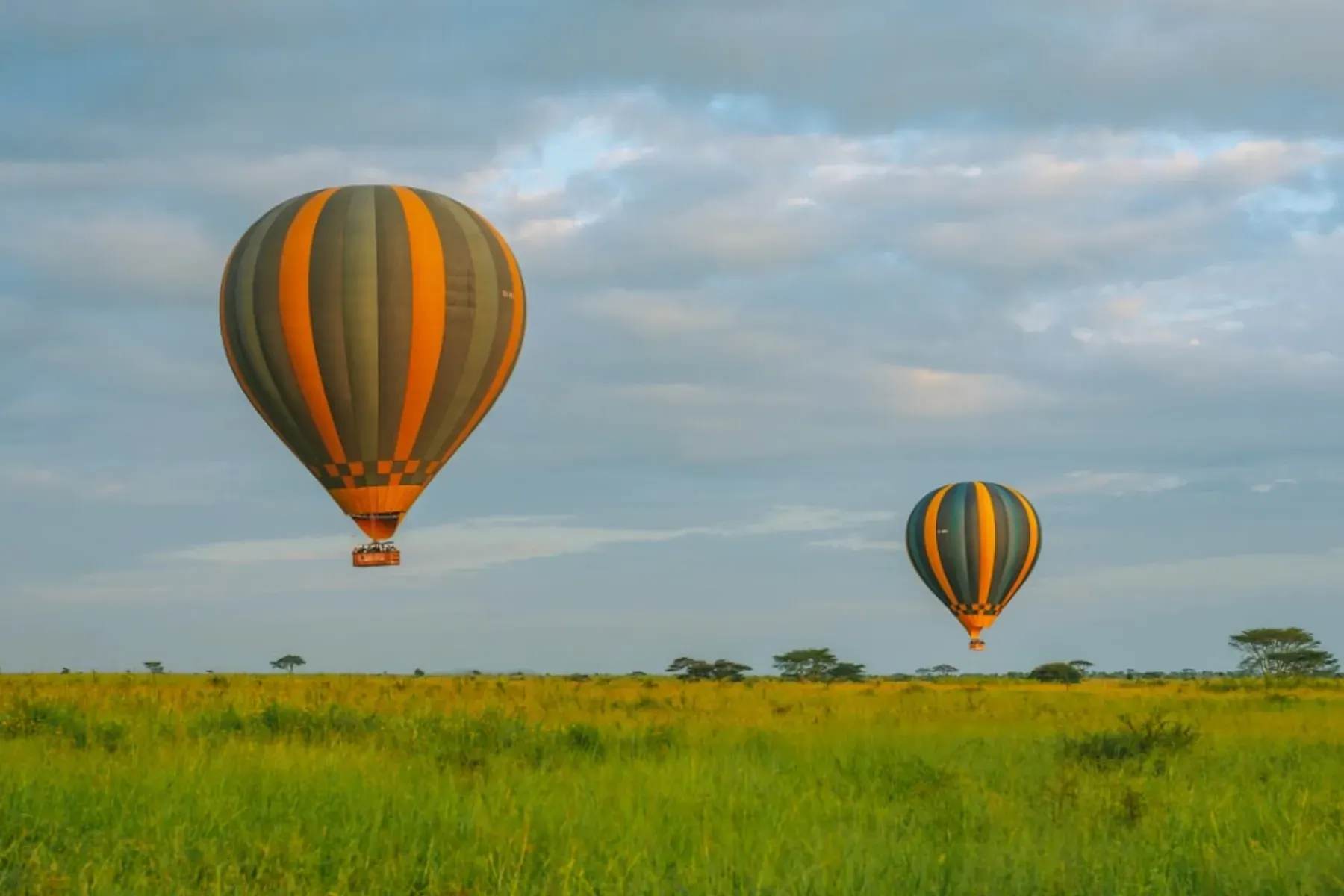
Then come the optional extras that make a trip your own. A hot air balloon flight over the Serengeti at dawn is one of the most memorable things you can add, and a walking safari in a suitable park brings you close to the small things a vehicle misses. Night drives, cultural visits and photographic vehicles all carry their own charges, and most are listed as optional activities, not included.
None of these is essential, and none should be added by default. Pick one or two that speak to you and leave the rest. A trip with a balloon flight and a quiet beach at the end usually feels richer than one with six activities squeezed between long drives.
11
What is included in a safari price, and what is not included
Reading the inclusions is as important as reading the number. On our itineraries, what is included in a safari price typically means park and conservation area entry fees, game drives in a 4x4 safari vehicle, a professional local guide for the whole trip, the meals listed in the daily plan, the lodging listed in the itinerary and private transfers from the airport and between camps.
What is not included is just as clear: international flights, visa fees, travel insurance, gratuities and optional activities. Drinks and personal spending are often outside the price too. A Tanzania visa is personal to each traveller and its rules change, so we point guests to the official immigration sources, and every guest should hold comprehensive travel insurance covering medical care, evacuation and cancellation.
Tipping on safari deserves a plan. Gratuities for guides, camp teams and porters are customary and are usually handled separately from the trip price. We share guidance on how and when to tip before you travel, so you can bring the right notes and avoid awkward moments at the end of a trip.
- Usually included: park fees, the vehicle and guide, listed meals, listed lodging and transfers.
- Usually excluded: international flights, visas, insurance, gratuities and optional activities.
- Always check drinks, laundry and Wi-Fi, which differ from one camp to the next.
12
How to budget honestly and compare quotes
If you want to know how to budget for a safari, start with the shape of the trip before the number. Decide the length, the parks and the feel you want, then ask for a quote built on that plan. Add a sensible reserve for gratuities, optional activities, drinks and souvenirs. It is better to arrive with a small cushion than to spend the last days counting.
To compare safari quotes fairly, line them up on the same basis. Check the number of nights and parks, the accommodation level and the exact camps, the vehicle type and how many guests share it, whether the flights are included and which meals are covered. Also confirm that park fees are inside the price. Two quotes that look alike on the surface can be quite different underneath.
Be wary of a cheap safari that cannot explain itself. A low price is not a fault in itself, and a Trail itinerary can be wonderful value, but it should come with clear answers about the vehicle, the guide, the camps and the fees. Honest operators welcome these questions, and the ones who dislike them tell you what you needed to know.
13
Reading your price and paying for it
A good quote states the price per person sharing, the dates, the camps by name, the inclusions and the exclusions, and the notes that explain what can change. Read those notes. Ours say that rates can shift with the exact dates and that the authorities fix park charges, which can change at short notice. That is the kind of honest detail you want before you commit.
Payment usually happens in two parts. A safari deposit confirms your booking, and the balance follows before you travel. The size of the deposit and the date of the balance are set for each trip and written in your quote and invoice, so you will know the amounts and dates before you pay anything. Our payments page describes the steps and how to pay safely.
If your plans or your budget change, say so early. A planner can often rebalance a trip by moving a night from one level to another, trimming a park or shifting the dates, without spoiling it. That conversation, held honestly, is the most useful tool you have, and it costs nothing.