
Walking Safari
On Foot in Nyerere
Leave the vehicle behind and let the bush come at you
- Duration
- 4 to 7 days
- Location
- Nyerere National Park (formerly Selous), southern Tanzania
- Guide
- A walking guide and an armed ranger on every walk
- From
- $3,000 per person
The experience
Leave the vehicle behind and let the bush come at you
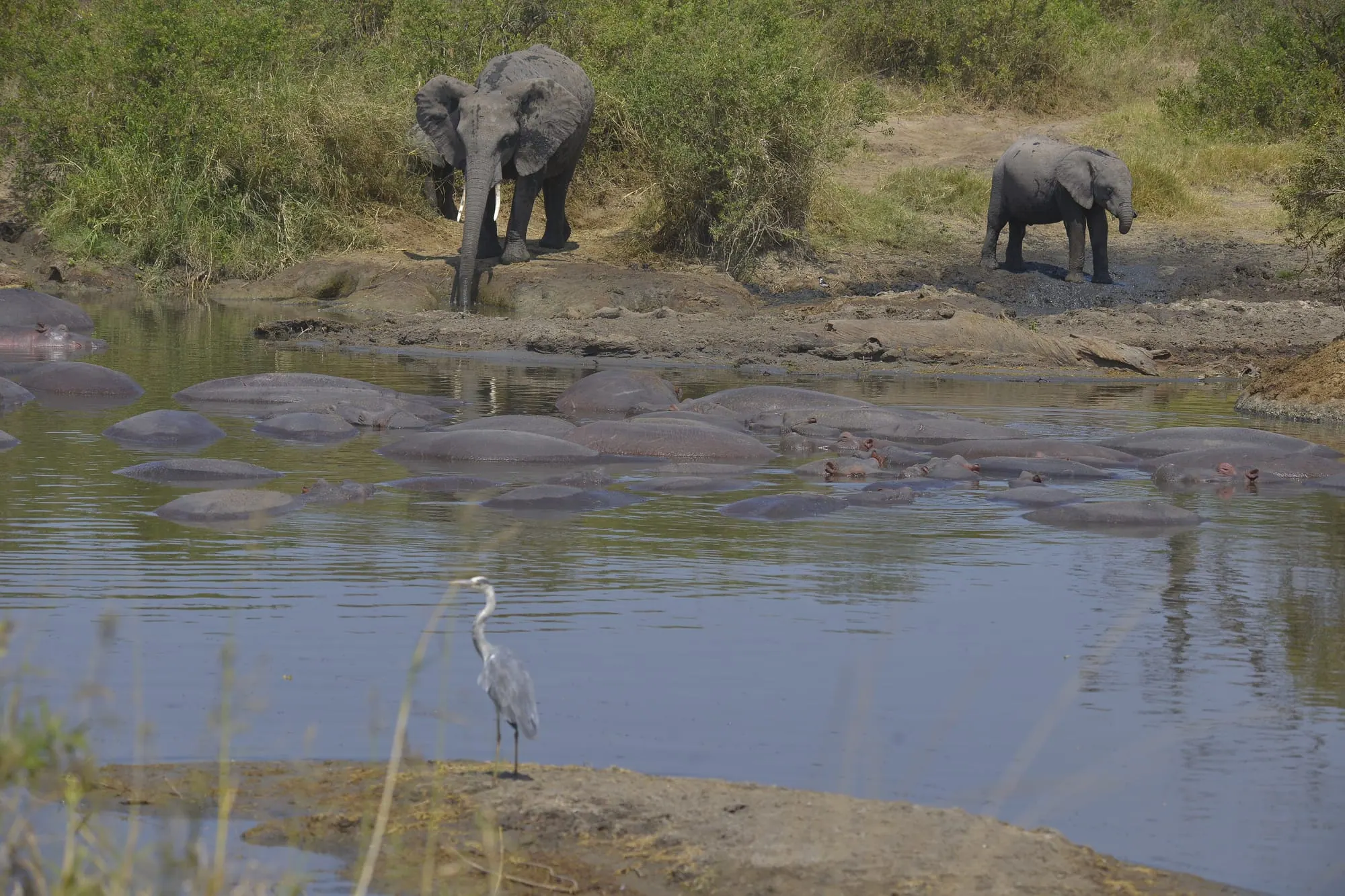
Nyerere National Park, the huge successor to the Selous, is one of Tanzania's real walking destinations. Walk with an armed ranger, drift down the Rufiji River by boat and, if you dare, sleep out at a fly camp.
- Guided walks with an armed ranger
- Boat safaris on the Rufiji River
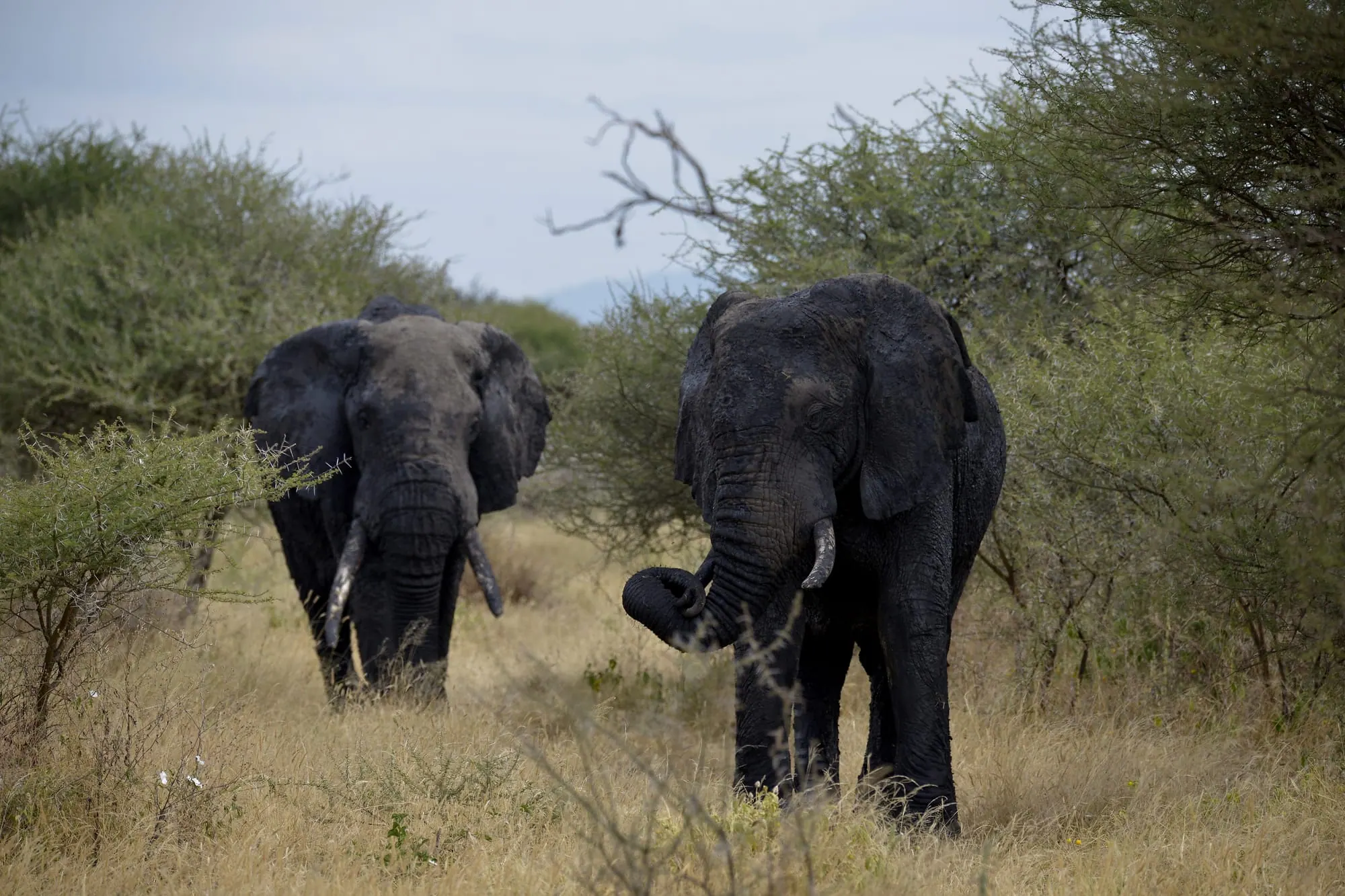
- African wild dogs and large elephant herds
- Remote fly-camp nights
What changes first, once you leave the vehicle, is the sound. From a 4x4 the bush plays like a film; on foot you are inside the soundtrack. Dry grass rasps against your boots, a francolin bursts from cover, and beyond the trees comes the low, unhurried huff of a hippo weighing whether you merit its attention. Your guide reads a scuff in the sand and murmurs 'lion, last night', and the hair on your arms reacts before your mind does.
A walking safari takes the same landscape you might drive through and amplifies the experience tenfold; you do not see more, you simply take in every sensation. Few places on the continent suit it better than Nyerere National Park, a huge, wild expanse threaded with rivers, which took over from the old Selous Game Reserve in the far south of Tanzania.
What walking in Nyerere means
Your small group sets out on foot while the morning is still cool, typically for a couple of hours up to three, behind a trained walking guide, with an armed park ranger alongside, who are both schooled in this craft. The focus falls on whatever vehicles drive past: tracks, dung, termite mounds, medicinal trees, insects, birds, and the careful craft of approaching big animals safely from downwind.
Within Nyerere, a walk is just one movement of a bigger composition. The Rufiji River, among East Africa's mightiest waterways, shapes the whole park, so a day can mix foot safaris with boat trips past hippos and crocodiles and drives over lake shores and palm groves. The most dedicated can add a fly camp, sleeping in open bush beneath mosquito nets while the wilderness supplies the soundtrack.
Why this park
- Walking is a core activity: the northern parks largely confine visitors to vehicles, whereas Nyerere's rules and traditions make foot safaris central rather than a novelty, and its guides walk daily.
- Genuine wilderness: the park covers roughly 30,000 square kilometres, one of the biggest national parks anywhere, yet only a sliver of the traffic found up north. Packs of wild dogs hold territories here, elephant and buffalo herds number among the largest in Tanzania, and rivers crowded with hippos evoke the Africa of half a century back.
- Three viewpoints in a day: walk in the morning, boat in the afternoon and drive at dusk. No other Tanzanian park offers the same ecosystem from three angles, and the golden-hour boat ride past yawning hippos could justify the trip alone.
Choosing your months
Jan to Dec
June to October is the straight answer for a walking trip: dry trails, thinning vegetation and wildlife gathered along the Rufiji and its lakes, which is where the walking happens. Sightlines are long, which matters on foot more than in any vehicle, and mornings are cool.
November to February turns the park green and brings migrant birds. Walks continue, but taller grass shortens the view and shifts the emphasis towards boating and driving. The long rains arrive between March and May: numerous camps shut, roads flood and walking is no longer sensible. The northern circuit has no equivalent, but Nyerere has a genuine low season that deserves respect.
How a day runs
5:45 AM
Tea, then boots
Walks leave early to use the cool hours, when animals and light are both active.
6:15 to 9:30 AM
The morning walk
Single file with the guide in front and the ranger alongside. Tracks, trees, termites, and a few pulse-quickening moments when the bush offers one.
Midday
Brunch and river time
Return to camp for a late breakfast and an afternoon nap through the hottest hours, with the Rufiji glinting as it flows past the veranda.
4:00 PM
Boat or drive
Watch hippos, crocodiles and carmine bee-eaters from a boat, or take a cooler-hour drive through the lakes area.
Evening
Dinner or fly camp
Supper in camp beneath the stars, or, on a fly-camp night, a simple bed on the ground, netting, flames and the raw, unfiltered noises of the wild.
What shapes the price
Cost depends on how you arrive, where you stay and what you bundle. Lemala Safaris will confirm figures for your dates.
- Getting there: the smoothest route into Nyerere is a light aircraft out of Dar es Salaam or Zanzibar. Fares run higher than driving the northern circuit, yet the flight lands you in remote wilderness within an hour.
- Camp style: camps here tend to be small, riverside and full of character rather than mass-market, and fly-camp nights, where offered, add cost and remove walls.
- Activity mix: walking, boating and driving are commonly packaged together, and a schedule weighted towards private walks and fly camps costs more than one centred on vehicles.
- Season: the dry months command the highest prices, whereas the shoulder periods of November and February give good value for only minor trade-offs.
Included
- Guided walks with an armed ranger
- Boat safaris on the Rufiji
- Park fees, meals and accommodation
- Game drives as the itinerary states
Not included
- Flights to and from the park
- Visa and international flights
- Gratuities
- Travel insurance
Fitness and kit
Walks cover roughly five to eight kilometres at a slow, stop-start naturalist's pace. The point is attention rather than distance, and anyone who can comfortably walk a couple of hours can join. The essentials are sturdy closed shoes, neutral colours (bright white genuinely causes trouble on foot, unlike inside a vehicle) and a readiness to obey your guide's instructions instantly and without argument. The minimum age for walking in Tanzania's parks is typically 16.
- Worn-in walking shoes or light boots
- Neutral clothing, no white or bright colours
- Sun hat and high-SPF sunscreen
- Binoculars, well worth their weight here
- Long trousers and socks as tsetse defence
- Light long sleeves for mornings
Gallery
In pictures
Journeys
Safaris built around this
Questions
Good to know
Strict protocols, honed across decades, govern every walk in Nyerere. You get a professional guide and an armed ranger, a small party moving in single file, approaches made from downwind and plenty of space around animals. Problems are very uncommon exactly because the rules are unexciting and non-negotiable. Your only job is to do what your guide says, immediately.
By count, yes, since you cover perhaps five kilometres on foot against fifty by car. But encounters land differently: a giraffe at eighty metres on foot is more electric than one at ten metres through a window. Most itineraries mix both, so you lose nothing overall.
Moderately. Expect a relaxed outing of two to three hours across largely level terrain, with regular pauses; heat is the chief challenge, hence the early starts. If you can walk five kilometres at home without trouble, you are fit enough.
You sleep away from the main camp on bedrolls beneath mosquito netting, eat dinner by the fire and wash with a bucket shower. Your crew and the armed ranger stay nearby, and only open sky sits above you. Nothing gets you closer to the bush, and those who try it tend to talk about it for years.
Park rules set the minimum age for walking at around 16. Families with younger children can still stay in Nyerere for boat safaris and game drives, both superb, while the adults take turns on the morning walks.
They are different instruments. The Serengeti offers open plains, vast herds and the migration, while Nyerere gives rivers, lakes, palms and a wilder, emptier feel with far fewer visitors. For a first safari the north is the usual pick; for a second trip, or for anyone allergic to crowds, the south and its walking are the draw.
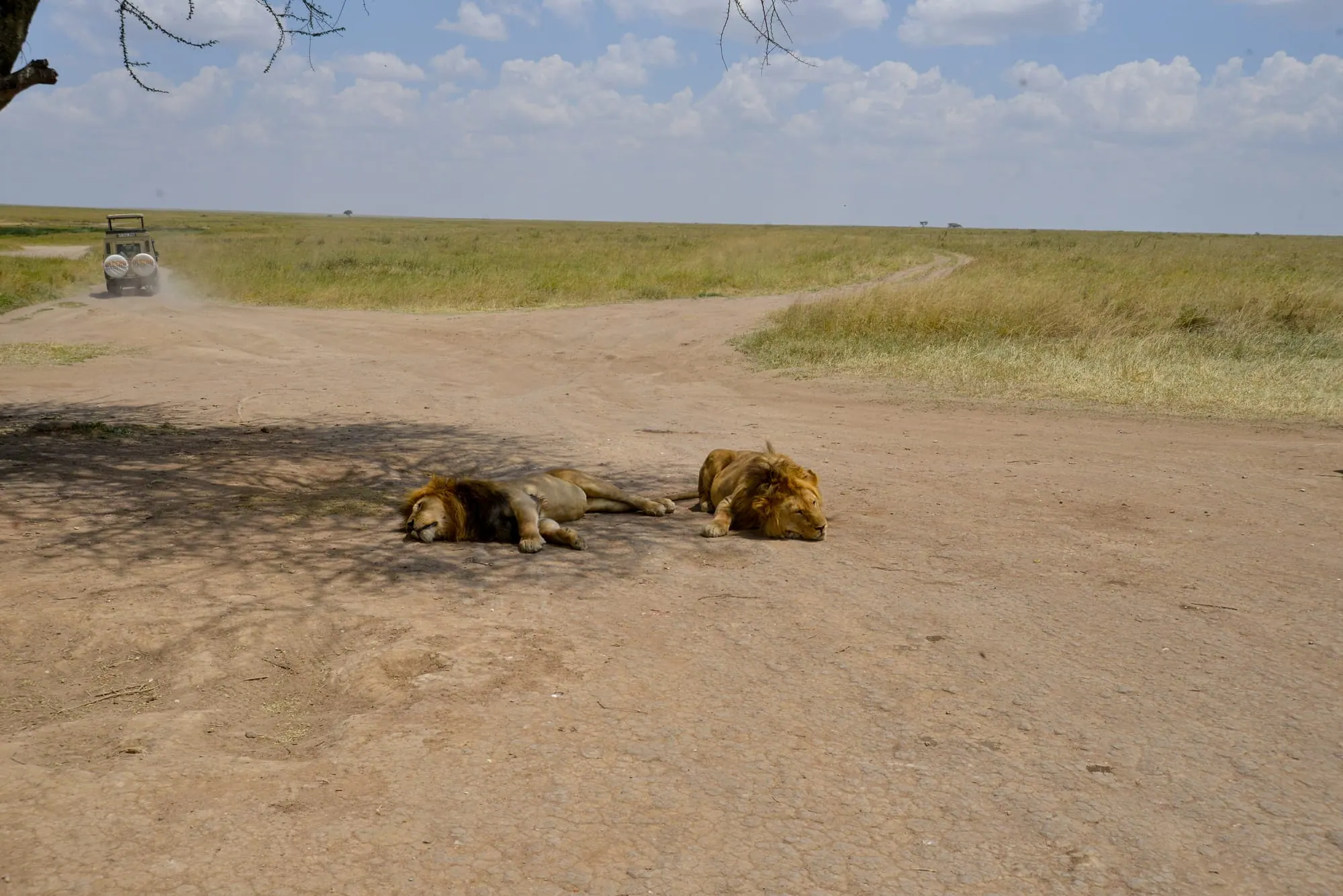
All that a vehicle drives past: new tracks you can read like a newspaper, the architecture of termite mounds, medicinal trees, birds at eye level, and giraffe, antelope and elephant encountered so near that you hear your own heartbeat. Big cats sometimes appear, but they are a bonus rather than the aim.

On Foot in Nyerere
Add it to a safari or build a trip around it. We will take care of the details.