
Ngorongoro Crater · Serengeti
Ndutu Calving Season: A Southern Photographic Safari
Newborn wildebeest, hunting cheetahs and a day in the crater, timed for the plains' most dramatic weeks.
- Duration
- 9 days
- Destinations
- Ngorongoro Crater · Serengeti
- Best months
- Jan, Feb, Mar
- Group size
- 1 to 6 guests
- From
- $4,830 per person
Overview
Newborn wildebeest, hunting cheetahs and a day in the crater, timed for the plains' most dramatic weeks.
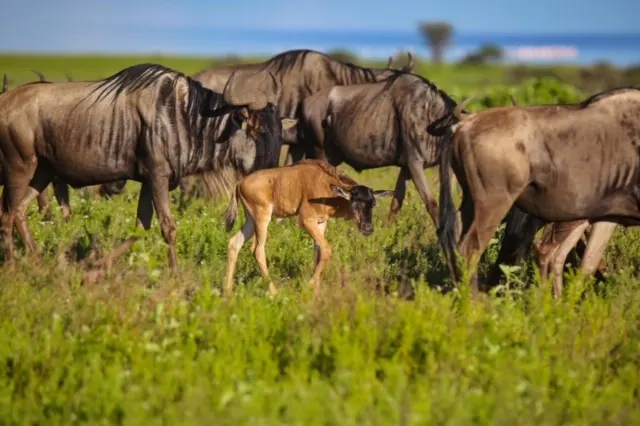
Most people picture the Great Migration as river crossings. This is the other chapter, earlier in the cycle and rawer: hundreds of thousands of wildebeest gathering on the short grass around Ndutu to give birth. At the peak as many as 8,000 calves arrive in a day, onto open ground with nowhere to hide, a fact not lost on any predator across the southern ecosystem.
Here is the southern chapter of our photography-led itineraries, nine days that begin with the resident game of Central Serengeti, continue to the calving grounds, stop at Olduvai Gorge, a cradle of human origins, and descend to the floor of Ngorongoro Crater. The finale is a genuine cultural encounter in Mto wa Mbu. Where a northern route chases river drama from July to October, this one heads south for the new life and predator pressure of February.
It is not a gentle safari. One morning may give you a newborn calf trying out its legs; the next could bring a cheetah in full pursuit, or hyenas gathered at a kill. Both are honest to the season, and both are why photographers return.
- Photograph one of the most intense, behaviour-rich phases of the Great Migration
- Begin in Central Serengeti with resident wildlife, so the trip builds toward the calving grounds
- Two full days at Ndutu itself, not a brief pass-through
- A stop at Olduvai Gorge, one of the world's key paleoanthropological sites, on the way to Ngorongoro
- A day in Mto wa Mbu on day eight, real market-town life rather than a scripted stop
- Descend into Ngorongoro Crater for a whole day, a total change of landscape and tempo
Best forPhotographersWildlife enthusiastsSolo travellers
Wildlife radar
What you can expect to see
Late January to March, while the herds calve on the Ndutu plains. This itinerary is only run in that window.
- WildebeestSeasonal
Newborn calves, with up to 8,000 births a day, January to March
- CheetahHigh
- LionHigh
- Spotted hyenaHigh
- Black rhinoHigh
- Golden jackalRare
The difference
A different kind of safari season
Most trips ask where the animals are. Calving season asks a sharper question: what is about to happen to them?
For a few weeks the plains around Ndutu hold some of the planet's highest concentrations of vulnerable young animals, and predators gather accordingly. Our vehicles stay parked rather than rolling on, because these scenes need patience: a cow circling a calf still struggling to stand, a cheetah scanning the herd from atop a termite mound, a jackal lingering on the fringe. Your guide senses the pressure rising across the grassland and has you positioned before it breaks.
Nothing here resembles the spectacle of a river crossing. The tension is slower and more intimate, then suddenly acute, and few subjects in the region reward a camera quite like it.
Along the way
Photography highlights
Central Serengeti as a warm-up
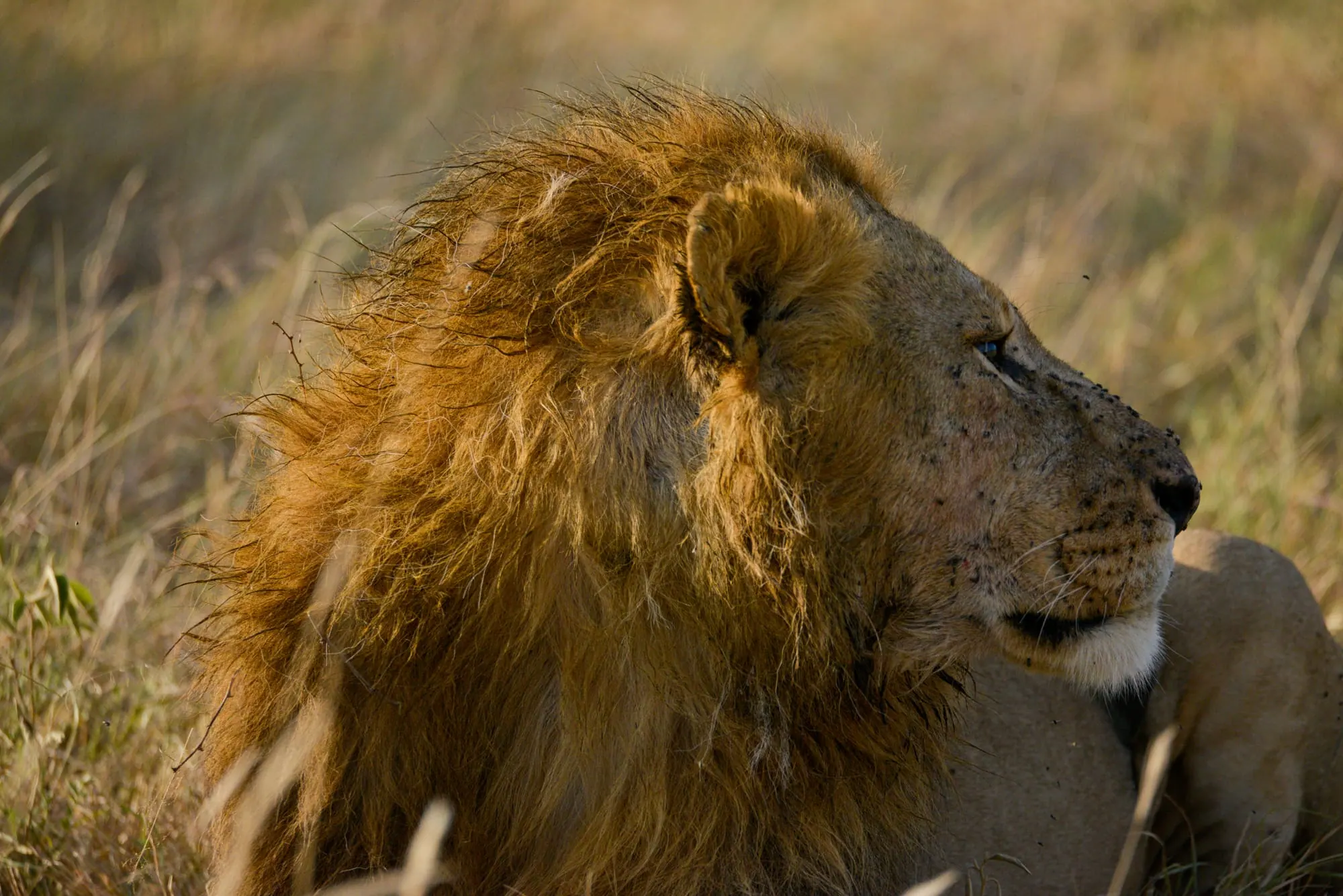
Two days around the Seronera valley's resident lions and leopards, before the herds arrive in force. It is a fine opportunity to watch hunters in surroundings the arriving herds have yet to transform.
Ndutu and its newborns
Short grass, open horizons and calves standing within minutes of birth. Clean backgrounds and soft February light produce some of the most moving images the migration offers all year.
Ndutu and its predators
Where there is new life in such numbers, hunters follow. Cheetahs thrive in this terrain, chasing prey across wide open ground where you can watch every move, while lions, hyenas and jackals work the herd edges. Expect behaviour and a story, not just a species list.
Olduvai Gorge
An intentional stop on the way from grassland to caldera, at a gorge whose fossils transformed our picture of where humanity began.
Ngorongoro Crater
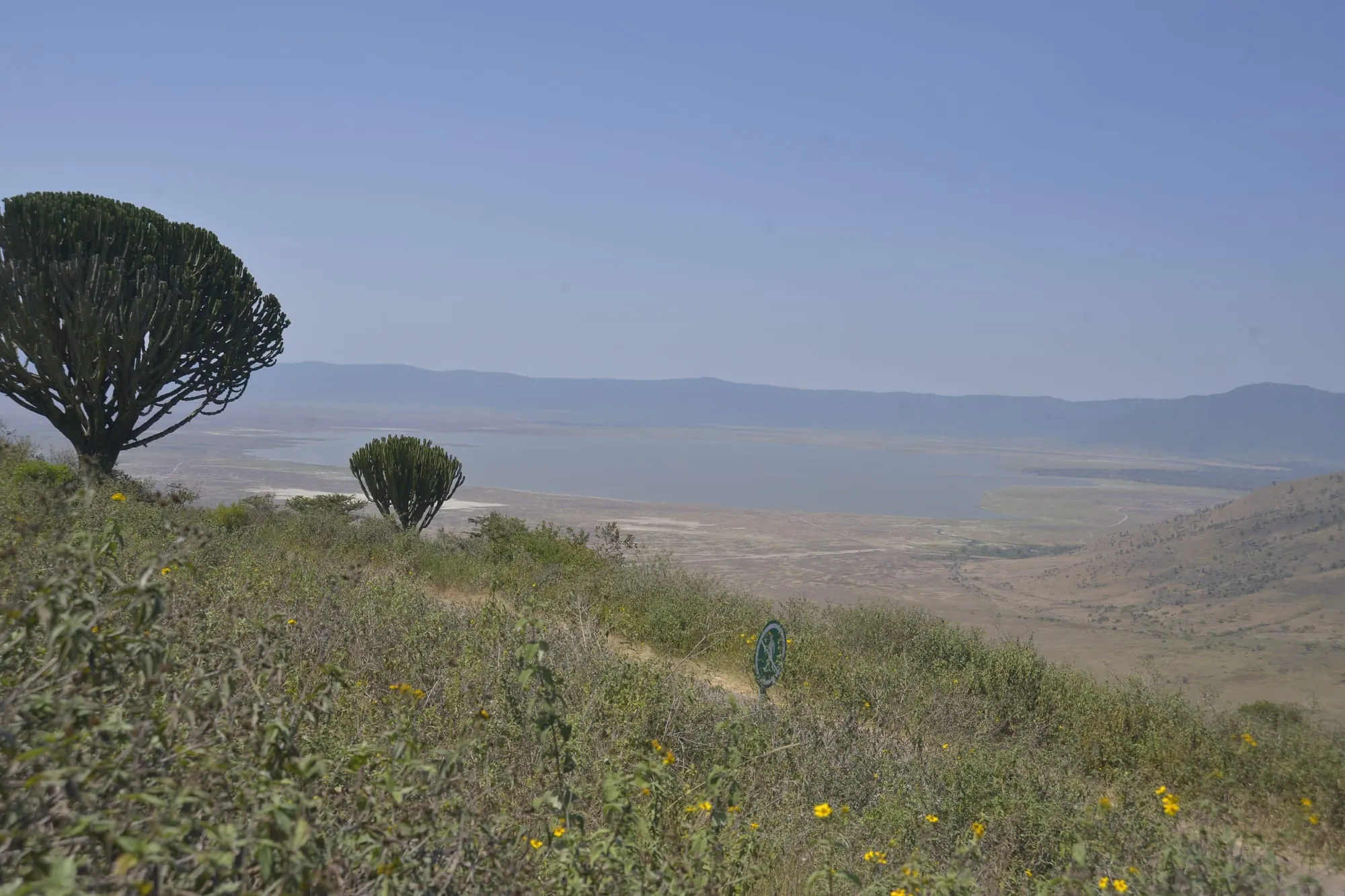
A day inside the crater's enclosed ecosystem: crowded herds, towering rims and a good prospect of animals Ndutu cannot equal in number, the endangered black rhino among them.
On the map
Your route
Follow the trip from the first night to the last, by road and by air.
- Start · Day 1Arusha
- Day 2-3Central SerengetiFlight from Arusha
- Day 4-5NdutuDrive from Central Serengeti
- Day 6KaratuDrive from Ndutu
- Day 7Ngorongoro CraterDrive from Karatu
- End · Day 8-9ArushaDrive from Ngorongoro Crater
Day by day
Your itinerary
Day 1
Arrival in Arusha
Arusha
Land at Kilimanjaro International Airport and ease into Arusha. Over dinner you meet your guide and discuss the season ahead: the pace of the days, the emotional side of the experience as well as the photographic one, and the signs your guide will be reading out on the plains.
The briefing explains why vehicles hold position at unfolding scenes instead of moving on, which is central to photographing calving season.
- Ridge
- Kahawa House
- Summit
- Arusha Coffee Lodge
- Meals
- Dinner
Day 2
Fly to Central Serengeti
Central Serengeti
A flight from Arusha to Seronera airstrip replaces a long overland transfer, so you are among the resident lions and leopards by the afternoon.
Seronera's resident prides do not follow the herds. They keep permanent territory with year-round water and offer some of the most dependable predator sightings in the ecosystem.
- Summit
- Siringiti Serengeti Camp
- Meals
- All meals
Day 3
A full day in Central Serengeti
Central Serengeti
A whole day with the Seronera valley's resident wildlife. It is a strong warm-up for the calving grounds and a chance to watch predators in a setting the herds have not yet changed.
Thick fig and sausage-tree cover makes the Seronera valley prime leopard country. This is often the best leopard day of the whole itinerary.
- Summit
- Siringiti Serengeti Camp
- Meals
- All meals
Day 4
South to the Ndutu area
Ndutu
The drive south brings you onto the Ndutu short-grass plains, with wide horizons and the particular light that photographers return for year after year.
Ndutu lies just outside the Serengeti National Park boundary, within the Ngorongoro Conservation Area. It is a different permit zone but the same migration.
- Ridge
- Ndutu Safari Lodge
- Meals
- All meals
Day 5
A full day at Ndutu
Ndutu
This is calving season at its peak. Wildebeest calves stand and totter within minutes of birth, and predators are never far away. Your guide will stay put instead of driving off, since the drama here tends to build slowly.
Around the peak, up to 8,000 calves can arrive on the Ndutu grasslands in just one day, and most are on their feet within minutes.
- Ridge
- Ndutu Safari Lodge
- Meals
- All meals
Day 6
Ndutu morning, Olduvai Gorge and Karatu
Ndutu, Olduvai Gorge, Karatu
A last morning on the Ndutu plains, then the drive toward Karatu with a stop at Olduvai Gorge, a major paleoanthropological site where fossil discoveries changed what we know about human origins.
Digs led by the Leakey family at Olduvai added more than a million years to the story of how humans evolved.
- Summit
- Gibb's Farm
- Meals
- All meals
Day 7
Ngorongoro Crater
Ngorongoro Crater
You spend a whole day down in the caldera, among crowded herds beneath steep walls, with a genuine chance of seeing animals the open plains rarely deliver in such numbers, among them the endangered black rhino.
The crater's enclosed bowl of roughly 260 km² (100 sq mi) keeps its wildlife concentrated all year and gives some of the best black rhino odds in the ecosystem.
- Summit
- Gibb's Farm
- Meals
- All meals
Day 8
Cultural time in Mto wa Mbu
Mto wa Mbu, Arusha
The mood shifts as you stroll the streets of Mto wa Mbu, a bustling market town, where you talk with local people rather than watch a rehearsed performance. Afterwards the road carries you on to Arusha.
The name means river of mosquitoes, but the town is better known as one of Tanzania's most ethnically mixed, with more than 120 tribes said to trade in its market.
- Ridge
- Kahawa House
- Summit
- Arusha Coffee Lodge
- Meals
- All meals
Day 9
Arusha and departure
Arusha
A final morning in Arusha, then a transfer to Kilimanjaro International Airport for the flight home, carrying grassland dust on your boots and a camera card holding a most unusual East African story.
- Meals
- Breakfast
Gallery
Along the route
Where you stay
Choose your style of stay
Price per person
Choose a level of stay and see what each person pays for your group size.
| Travelling together | Price per person |
|---|---|
| 2 travellers | $5,891 |
| 3 travellers | $5,360 |
| 4 travellers | $5,095 |
| 5 travellers | $4,936 |
| 6 travellers | $4,830 |
- Prices are in US dollars, per person sharing a double or twin room. Vehicle and guide costs are shared, so the price per person changes with group size and does not always fall in a straight line.
- Park fees are set by the authorities and can change, so the quote you accept is the price that applies.
What's included
- Park, concession and conservation area fees
- Vehicle, guide and fuel on every game-drive day
- The domestic flight from Arusha to Seronera, and airport transfers
- Drinking water
- Your guide's accommodation
- All meals on safari
- Accommodation as set out in the itinerary
- Emergency medical evacuation cover
Not included
- International flights
- Visa fees
- Travel insurance
- Gratuities
- Camera and lens rental
Good to know
- This itinerary runs only during calving season, from late January to March, for example on a February departure. There is no low-season rate because the safari is not offered outside that window.
- Your deposit confirms the booking and the balance is due before you travel. The amounts and dates are set out in your personal quote and invoice.
- Availability and rates depend on your exact dates within the season.
- Government park and conservation fees can change without notice.
Questions
Good to know
It is built around behaviour and timing instead of simply finding wildlife. Newborn wildebeest and busy predators share Ndutu's open plains, giving photographers storytelling chances that a general game drive rarely offers at this density.
The price depends on party size and accommodation tier, and each safari is tailored, so please request a personal quote for your dates.
The main window runs from roughly late January to March, and calving usually peaks in February.
Spending a day and a half with the resident predators first lets the trip build toward the calving grounds instead of opening at peak intensity. It also trims transit time later in the route.
It is one of the planet's most important sites for human origins research, where fossil finds by the Leakey family changed scientific thinking. It makes a deliberate change of register between plains and crater, and travellers often mention it afterward.
Yes. It suits every skill level, and your guide offers practical help on positioning, light and camera settings in the field.
It is tailored to your dates, with parties kept small so each photographer has proper room to work.
Bring a DSLR or mirrorless camera, a lens from wide to mid-range for scenery, and a telephoto reaching at least 400 mm. A 500 to 600 mm lens rewards distant subjects, and a 70 to 200 mm is useful for closer sightings.
Yes. Ask about adding Zanzibar after the safari, or about how this southern route differs from a July to October river-crossing safari if you are choosing between them.

Ndutu Calving Season: A Southern Photographic Safari
Tell us your dates and group size and we will confirm availability and a personal quote.