Kilimanjaro resources
Kilimanjaro packing list
What to pack for Kilimanjaro, organised by layer and by stage of the climb, with the weight limits that matter and the mistakes that cost climbers the most comfort.
- 15 kg
- Duffel limit for the porter who carries your main bag
- 5 to 8 kg
- Typical weight of your own daypack
- 5 climate zones
- From warm rainforest to freezing summit night
- Below 0°C
- Summit night temperatures can fall well below freezing
How to think about Kilimanjaro packing
Kilimanjaro takes you from warm, humid rainforest to freezing air in about a week, so you pack for four seasons in one trip. A safari asks for light, neutral, breathable clothes. The mountain asks for warm layers, a waterproof shell, insulated gloves, a four-season sleeping bag and well-fitted hiking boots.
Your porter carries your main duffel, capped at 15 kg, while you carry a small daypack with what you need during the day: water, a rain jacket, warm layers, snacks, a camera and sun protection. Five to eight kilograms is typical. Layering is the key. You add and remove thin layers as the temperature changes, instead of relying on one thick jacket.
Personal trekking gear and clothing are not included in the climb price, so this is your list. If you plan a safari as well, you can leave the mountain gear in storage in town while you are on safari.
Clothing, layer by layer
Base layers
- Two or three moisture-wicking tops
- Two thermal base layer bottoms
- Underwear that dries quickly
- Hiking socks, several pairs, plus warm socks for camp
Mid layers
- A fleece or light insulated mid layer
- Trekking trousers
- A second warm layer for summit night
Outer layers
- A warm insulated or down jacket
- A waterproof shell jacket
- Waterproof over-trousers
Hands, head and neck
- Insulated gloves, with thin liners
- A warm hat and a sun hat
- A scarf or buff
- Sunglasses with UV protection
Boots, sleeping bag and daypack
Your boots matter more than almost any other item. Buy them early and break them in over many hours, on hills and in wet conditions if you can. Blisters on day two of a seven-day trek are almost always avoidable.
Footwear
- Waterproof hiking boots with good ankle support and a stiff, grippy sole
- Camp shoes or light sandals
- Gaiters, which earn their place on muddy forest paths
Sleeping
- A four-season sleeping bag suited to sub-zero nights
- A sleeping bag liner
- Earplugs and an eye mask
Daypack and poles
- A comfortable daypack with a rain cover
- Trekking poles, which take pressure off your knees on the descent
- A head torch with spare batteries, which keeps both hands free
Water and food
- Water bottles or a hydration bladder for three to four litres a day
- Snacks you enjoy, such as nuts, dried fruit and energy bars
- Electrolyte or rehydration salts
Health, comfort and documents
Health and comfort
- Any prescription medicine in its original packaging, with a copy of the prescription
- A small first aid kit with blister treatment
- High-factor sunscreen and lip balm with a sun filter
- Hand sanitiser, wet wipes and toilet paper
- A power bank, because cold drains batteries
Documents and money
- Passport, valid for at least six months, and your visa
- Travel insurance covering trekking to 6,000 m, evacuation and medical care
- Printed copies of your itinerary and flight details
- Small notes for gratuities, kept in a clean envelope
What to wear at each stage of the climb
Kilimanjaro crosses five climate zones, so what you wear changes with the zone.
| Stage | Conditions | What to wear |
|---|---|---|
| Rainforest | Warm, humid and often wet; muddy paths | Light base layer, waterproof shell, gaiters and trekking trousers |
| Moorland and plateau | Open, windy and changeable; cool in the shade | Base layer, fleece, sun hat and sunglasses, with a shell in your daypack |
| Alpine desert and high camps | Dry, cold nights and strong sun by day | Thermal layers, insulated jacket, warm hat and gloves for camp |
| Summit night | Well below freezing, with wind making it feel colder | Every layer you have: thermals, fleece, insulated jacket, shell, warm hat, insulated gloves, neck gaiter and head torch |
What the crew provides and what you bring
On our tented routes the following is included in the price. Everything on the right is yours to pack.
Provided by the crew
- Four-season sleeping tents and foam mats
- A dining tent, a kitchen tent and a private toilet tent
- A mountain cook and full board
- A porter for each trekker, carrying your duffel
- Emergency bottled oxygen carried with the team
Bring yourself
- Clothing and boots
- Sleeping bag
- Daypack, poles and head torch
- Personal medicine and sun protection
- Insurance, passport and visa
Never use anything for the first time on the mountain
That includes boots, socks, base layers, waterproofs and your head torch. Test everything on a wet, cold weekend walk and you will find the problems at home rather than at 4,000 m. Brand-new boots are the most common and most painful mistake.
What to leave at home
Leave expensive jewellery, cotton clothing that stays wet, heavy cameras you will not use, and anything that pushes your duffel past 15 kg. Drones need permits and are generally not allowed in the national parks. Plastic carrier bags are restricted in Tanzania, so use reusable cloth pouches or dry bags to keep your kit organised.
If you have time on the coast or on safari afterwards, a second small bag left at your hotel keeps your clean clothes ready for the end of the climb.
Questions answered
What travellers ask us
Pack in layers: moisture-wicking base layers, a fleece, a warm insulated jacket, a waterproof shell and over-trousers, insulated gloves, a warm hat, waterproof hiking boots, a four-season sleeping bag, a daypack and a head torch. The sections above give a full list by layer and by stage.
The porter who carries your main duffel is limited to a 15 kg load for it, so keep your bag at or below that and put what you need during the day in your own daypack.
Summit night is the coldest part of the climb, with temperatures well below freezing and wind making it feel colder. Wear thermal layers, a fleece, an insulated jacket, a waterproof shell, a warm hat, insulated gloves, a neck gaiter and a head torch.
Personal trekking gear is not included in the climb price. The crew provides the tents and foam mats, and you bring a four-season sleeping bag suited to sub-zero nights. Ask your planner if you are unsure.
Many trekkers like them, because they take pressure off the knees on the long descent. If you plan to use them, use them in training too.
Waterproof hiking boots with good ankle support and a stiff, grippy sole, broken in well before you travel.
Yes. If you are combining the climb with a safari or a beach stay, you can usually leave the gear you do not need at your hotel. Tell your planner so we can arrange it.
Keep planning
Where to go next
Best time to climb Kilimanjaro
Climbing windows, the rains and which route suits which month.
Read moreDifficulty and success rate
How hard it really is, and what improves your chances.
Read moreCompare the six routes
Machame, Lemosho, Marangu, Rongai, Umbwe and the Northern Circuit.
Read moreTravel information
Visas, health, money and packing for the safari side of your trip.
Read more
Free guides
Plan your climb with our free guides
Read the routes side by side and plan your trip at your own pace. Tell us where to send them and they arrive in your inbox.
 Free PDF
Free guide
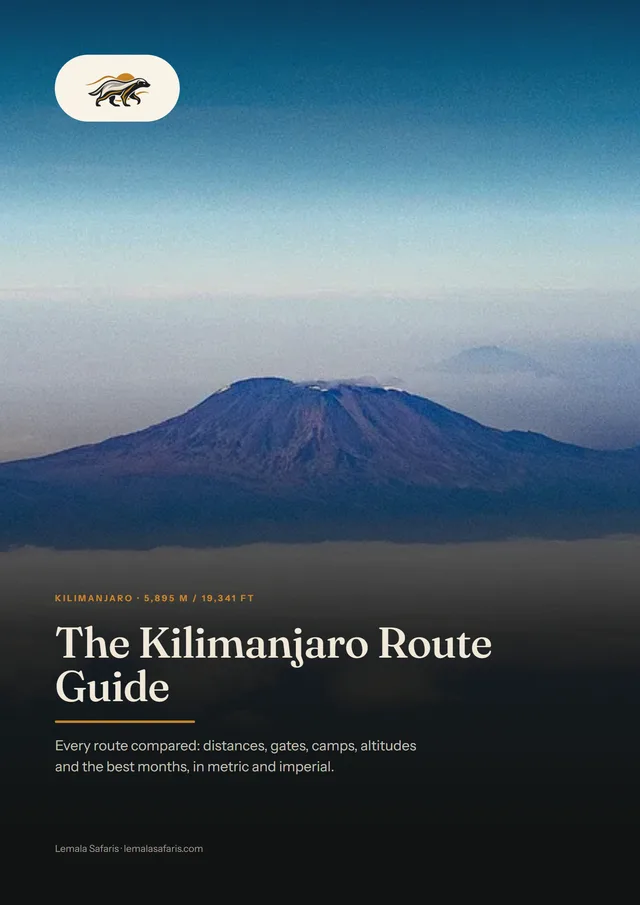
The Kilimanjaro Route Guide
Every route compared: distances, gates, camps, altitudes and the best months, in metric and imperial.
- Every route side by side: days, distance, start and finish gates, and where you sleep
- A day-by-day table for each route with elevation and distance, in metric and imperial
- The best months to climb, shown as a month strip for every route
 Free PDF
Free guide
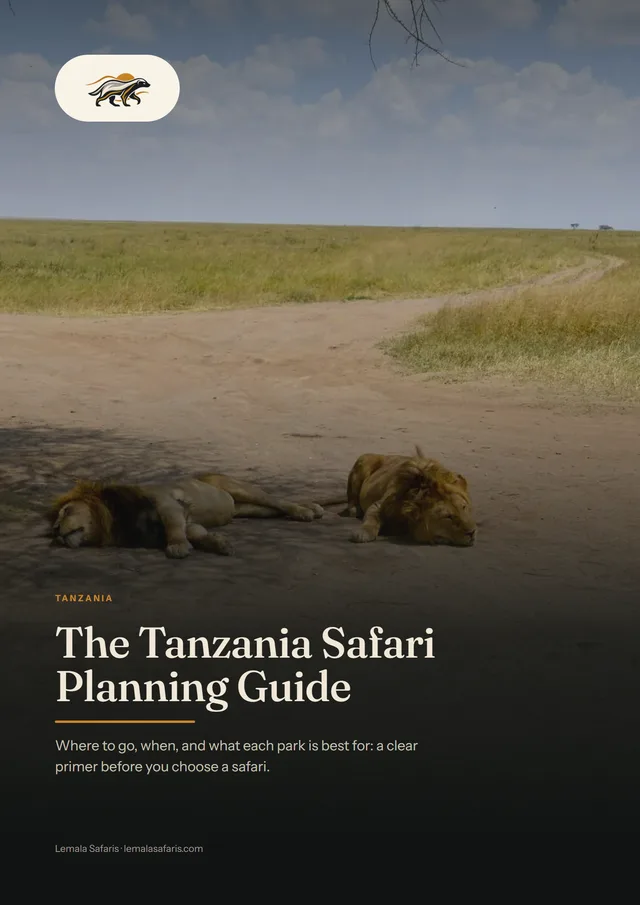
The Tanzania Safari Planning Guide
Where to go, when, and what each park is best for: a clear primer before you choose a safari.
- The best months for every park, park by park, on one page
- A profile of each destination: the landscape, the wildlife to expect and the size of the park
- The ways to travel, from classic game drives to walking, beach and combination trips
Your Kilimanjaro climb
Ready for the roof of Africa?
Tell us when you would like to climb and we will suggest the route and pace that give you the best chance of standing on Uhuru Peak.
No obligation and no pressure. We reply personally.
- 01
Tell us about your climb
When you would like to go, your group and any mountain experience. Two minutes is enough.
- 02
A real person replies
A Lemala planner suggests the route and pace that give you the best chance at the summit.
- 03
Get your tailored plan
A day-by-day plan and a clear quote, shaped around you. No obligation.