
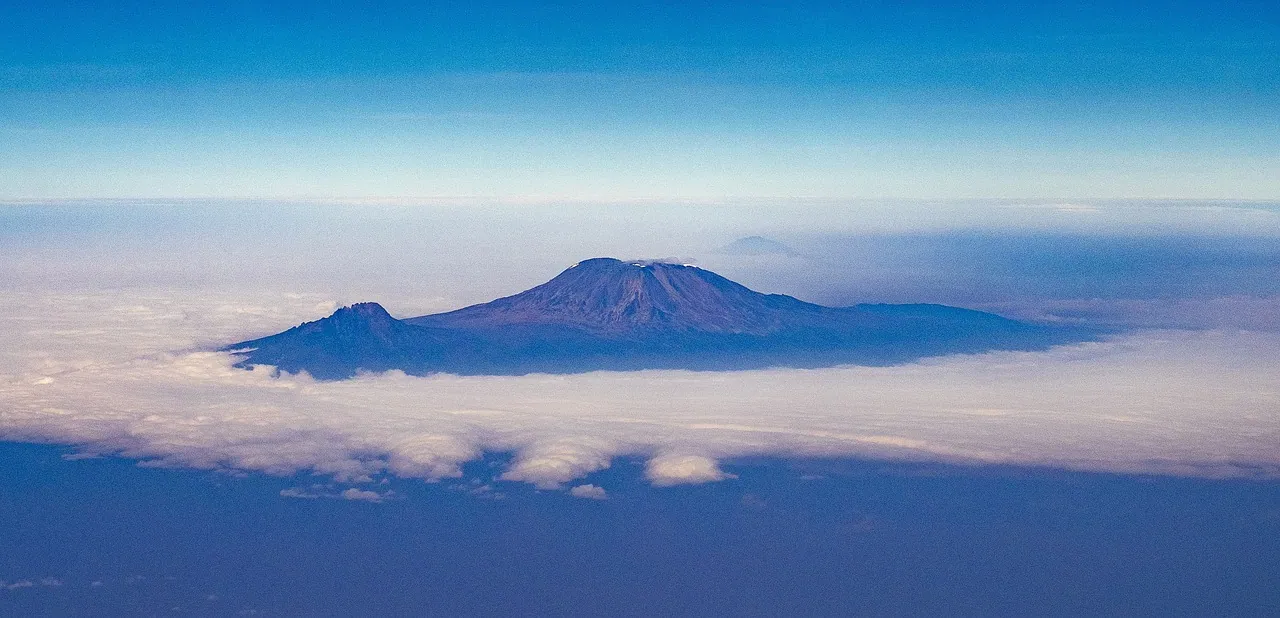
Kilimanjaro resources
How hard is Kilimanjaro? Difficulty and success rate
Kilimanjaro is not a technical climb, but it is a serious one. Here is how hard it really is, what actually decides whether you reach the top, and how to improve your chances.
- 5,895 m
- Uhuru Peak, the highest point in Africa
- 0
- Technical climbing skills needed on the standard routes
- 5 to 8 hrs
- Typical walking on a normal day
- 10 to 14 hrs
- Summit day, including the descent
How hard is it to climb Kilimanjaro?
Kilimanjaro is not a technical climb. There are no ropes, no crampons on the standard routes and no climbing skills to learn. It is a long walk up a very big mountain, and the summit of Uhuru Peak sits at 5,895 m / 19,341 ft. The challenge is not technique. It is the altitude, the cold, the length of the days and the summit night.
You need to be fit enough to walk for five to eight hours a day, several days in a row, carrying a light daypack, and still be able to walk for ten to fourteen hours on summit day. That is a strong base of general fitness, but not an athlete's level.
What is the Kilimanjaro success rate?
People like to ask about the summit success rate. Estimates vary widely between operators and sources, and we do not quote a single figure, because a number without context misleads. How operators count success, which routes they count and how many days they allow all change the answer.
What we can say is that longer routes with gradual height gain, such as the Lemosho and the Northern Circuit, tend to do better than shorter ones. More days means more time to acclimatise, and acclimatisation is the single most important factor. When you compare operators, ask how they define and track success.
What actually decides whether you reach the top
Time at altitude
Kilimanjaro acclimatisation cannot be hurried. Climbers who gain height slowly and spend an extra night or two on the way up are less likely to suffer badly and more likely to feel strong on summit night.
Pace
Pole pole, Swahili for slowly slowly. Your guide will set a pace that feels almost embarrassingly gentle, and that is deliberate. It keeps your heart rate down and saves energy.
Climb high, sleep low
Walking up to a higher point during the day and returning to a lower camp for the night. The Lava Tower detour on Machame and Lemosho builds this in.
Fitness and preparation
Fitness and altitude tolerance are different things, but a body that is not struggling with the walking has more energy left for thin air. Training also builds the confidence you need on the long days.
Honesty with your guide
Tell your guide straight away how you feel and never hide symptoms. A good guide checks the group every day and will make the call to descend if needed.
Mindset
Break summit night into small pieces, such as the next break or the next fifty steps. Flexible rather than fixed thinking often makes the summit more likely.
Difficulty by route
All six routes end on the same crater rim. They differ in length, gradient, crowds and how well they let your body adjust. Seven or eight days gives most people a better chance of reaching the top than six.
| Route | Duration | Distance | Sleeping | Best months | Difficulty |
|---|---|---|---|---|---|
| Machame Route | 6 or 7 days | 62 km / 39 mi | Four-season tents at every camp | Jan to Feb, Jun to Oct | Demanding but non-technical; steady walking with one hands-on scramble |
| Lemosho Route | 6, 7 or 8 days | 70 km / 43 mi | Four-season tents at every camp | Jan to Feb, Jun to Oct | Demanding but non-technical; long days eased by gradual acclimatisation |
| Marangu Route | 5 or 6 days | 64 km / 40 mi | Shared dormitory huts at Mandara, Horombo and Kibo | Jan to Feb, Jun to Oct | Moderate on the legs, though the quick climb makes altitude the real test |
| Rongai Route | 7 days | 65 km / 40 mi | Four-season sleeping tents at every camp, except the stone hut at Kibo | All year | Moderate to challenging, with a gradual profile but a steep final slope on summit night |
| Umbwe Route | 6 or 7 days | 54 km / 34 mi | Four-season sleeping tents at every camp | Jan to Feb, Jun to Oct | Very hard: steep from the first step, recommended only for experienced high-altitude trekkers |
| Northern Circuit | 8, 9 or 10 days | 98 km / 61 mi | Four-season sleeping tents at every camp | Jan to Feb, Jun to Oct | Moderate overall: long days, but a gentle build-up in altitude |
Altitude sickness: what to know
Altitude sickness, properly called acute mountain sickness, is common on Kilimanjaro. Early signs are often a headache and nausea, followed by dizziness, tiredness, loss of appetite and poor sleep. Mild symptoms are not unusual and often ease with rest, fluids and a slower pace. The rule is simple: tell your guide straight away and do not climb higher if your symptoms are getting worse.
More serious signs need immediate action, and the treatment is to descend promptly. A good operator checks the health of the group every day, with oxygen levels measured morning and evening at each camp, and carries emergency oxygen with the team. We do not give medical advice, so talk to your own doctor before you travel.
Summit night: the hardest part
Summit night is the hardest part of the trip for nearly everyone. You usually wake around midnight, eat something, dress in all your layers and set off by head torch in the cold and dark, walking slowly in single file up a steep slope toward the crater rim. Most climbers reach Stella Point at 5,739 m as first light spreads, and the walk on to Uhuru Peak takes a further stretch along the rim.
Not everyone reaches the top, even with excellent training and a good guide. Weather, health and altitude can all decide the outcome. If you turn back, you have still made a serious trek and used good judgement. Reaching the top matters, but getting home well matters more.
Training and preparation
A 12-week plan is a sensible length for most people. Build a base with regular walking and strength sessions, raise the load with weekend hikes of two to four hours with a daypack, and in the last month add back-to-back hiking days, which copy the tiredness of day three on the mountain. Break in your boots, practise with the daypack you will carry, and taper in the final week.
Insurance should explicitly cover trekking to 6,000 m, evacuation and medical care. Talk to your doctor early, especially if you have a heart, lung or blood pressure condition, are pregnant or take regular medication.
Questions answered
What travellers ask us
It is a serious trek, but it is not technical. There are no ropes or climbing skills needed on the standard routes. The challenge is the altitude, the cold, the length of the days and the summit night.
Fit enough to walk five to eight hours a day, several days in a row, carrying a light daypack, and to keep going for ten to fourteen hours on summit day. A strong base of general fitness, not an athlete's level.
Estimates vary widely, and we do not quote a single figure because a number without context misleads. Longer routes with gradual height gain, such as Lemosho and the Northern Circuit, tend to do better than shorter ones.
People often point to Marangu because of the huts and moderate gradients, but easy on the legs is not the same as easy on the lungs. For most first-timers, the eight-day Lemosho or the seven-day Machame give your body more time, which matters most.
Yes. Many first-time trekkers reach the summit. Choose a route with more days, train with hills and loaded walking, and be honest with your guide about how you feel.
You wake around midnight, dress in all your layers and walk slowly by head torch. It is cold, steep and long, and the total effort of summit day, including the descent, can be ten to fourteen hours.
No. Fitness and altitude tolerance are different things, and how you respond cannot be predicted from age, sex or fitness. That is why time on the mountain matters so much.
Keep planning
Where to go next
Kilimanjaro packing list
What to bring, layer by layer, and what to leave at home.
Read moreBest time to climb Kilimanjaro
Climbing windows, the rains and which route suits which month.
Read moreCompare the six routes
Machame, Lemosho, Marangu, Rongai, Umbwe and the Northern Circuit.
Read moreHow to train for Kilimanjaro
A 12-week plan, boots and pack, and coping with altitude.
Read more
Free guides
Plan your climb with our free guides
Read the routes side by side and plan your trip at your own pace. Tell us where to send them and they arrive in your inbox.
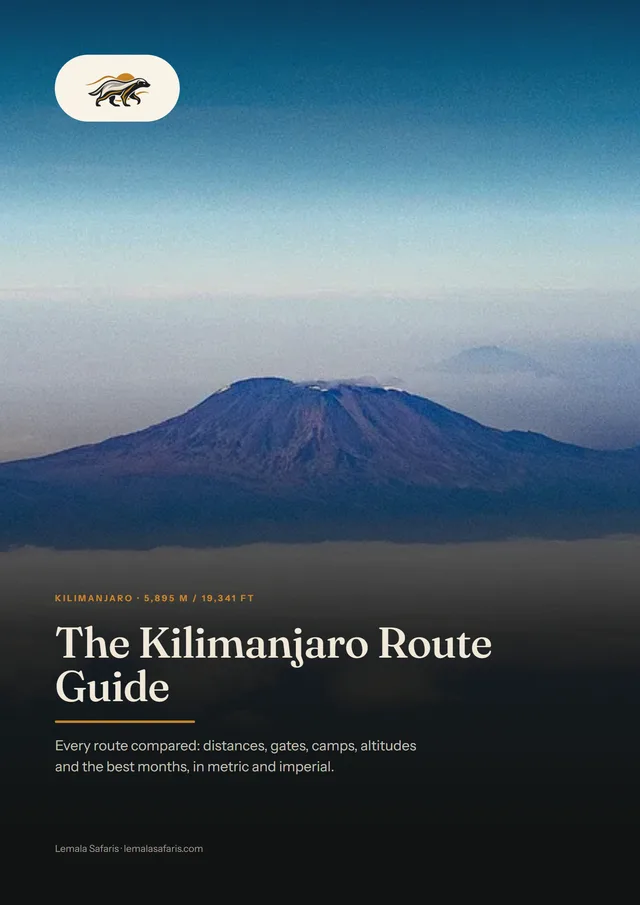 Free PDF
Free guide
The Kilimanjaro Route Guide
Every route compared: distances, gates, camps, altitudes and the best months, in metric and imperial.
- Every route side by side: days, distance, start and finish gates, and where you sleep
- A day-by-day table for each route with elevation and distance, in metric and imperial
- The best months to climb, shown as a month strip for every route
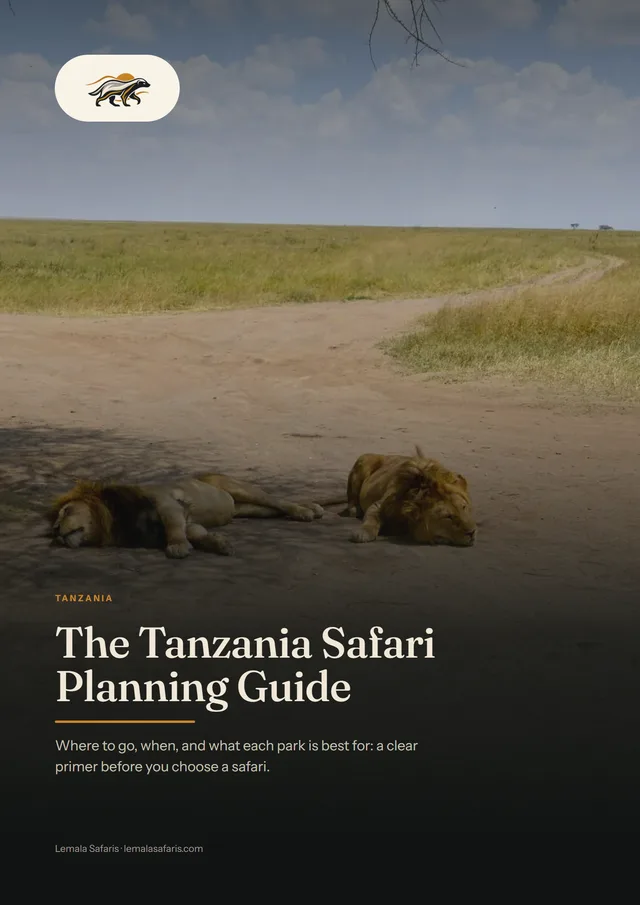 Free PDF
Free guide
The Tanzania Safari Planning Guide
Where to go, when, and what each park is best for: a clear primer before you choose a safari.
- The best months for every park, park by park, on one page
- A profile of each destination: the landscape, the wildlife to expect and the size of the park
- The ways to travel, from classic game drives to walking, beach and combination trips
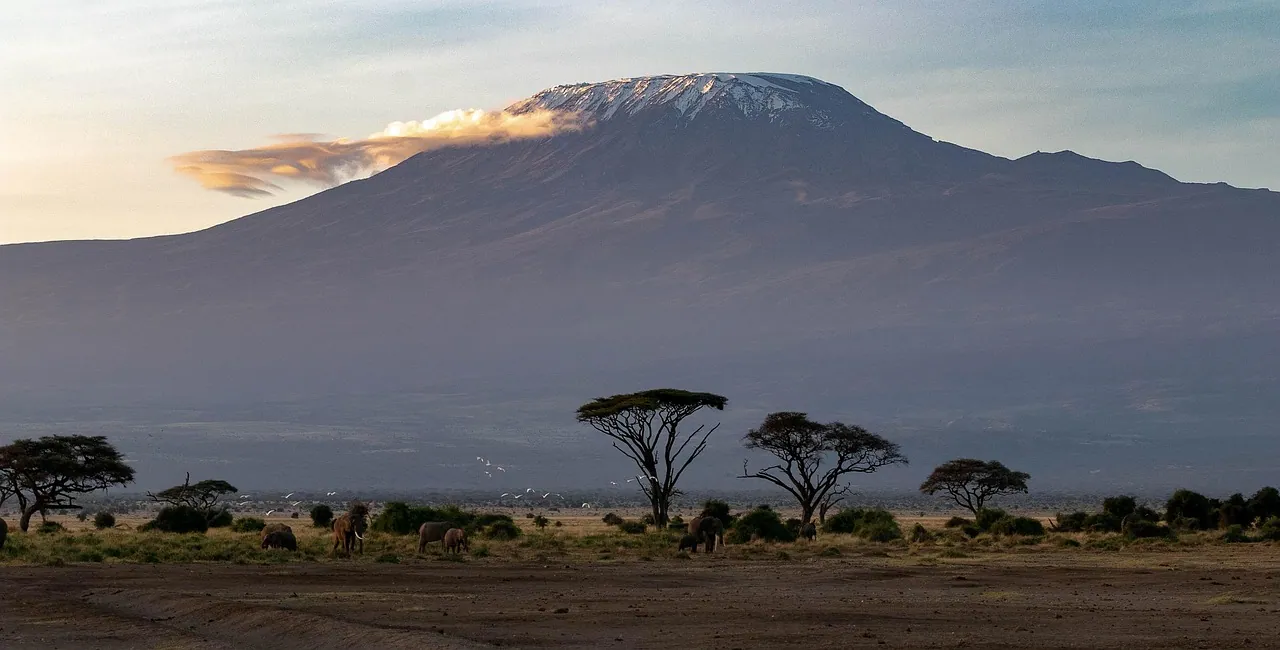
Your Kilimanjaro climb
Ready for the roof of Africa?
Tell us when you would like to climb and we will suggest the route and pace that give you the best chance of standing on Uhuru Peak.
No obligation and no pressure. We reply personally.
- 01
Tell us about your climb
When you would like to go, your group and any mountain experience. Two minutes is enough.
- 02
A real person replies
A Lemala planner suggests the route and pace that give you the best chance at the summit.
- 03
Get your tailored plan
A day-by-day plan and a clear quote, shaped around you. No obligation.