
Kilimanjaro resources
Kilimanjaro climbing FAQ
Short, straight answers to the questions climbers ask us most, with links to the full guides when you want more detail.
Start here
The five guides that answer most of what first-time climbers need to know.
Pick a route
Six routes, one mountain. More days usually means better odds. The eight-day Lemosho and seven-day Machame suit most first-timers.
Choose your dates
Late June to October and January to mid-March are the two drier windows. Rongai is the pick for the rains.
Get fit and train
Hill walking with a loaded pack, back-to-back days and well broken-in boots matter more than gym work.
Pack well
Layers, a waterproof shell, a four-season sleeping bag and boots you have worn for many hours.
Insure properly
Insurance must cover trekking to 6,000 m, evacuation and medical care.
Talk to us
Tell us your dates, experience and worries, and we will recommend a route honestly.
Questions answered
What travellers ask us
Our routes run from five to ten days. More days gives your body more time to acclimatise, and seven or eight days gives most people a better chance of reaching the top than six.
It depends on your time, experience and what you want from the walk. For most first-timers we suggest the eight-day Lemosho or the seven-day Machame, because both give your body time. Marangu uses huts, Rongai is quietest and best in the rains, Umbwe is the most direct and hardest, and the Northern Circuit is the longest and quietest.
No. There are no ropes or crampons on the standard routes and no climbing skills to learn. The Barranco Wall on Machame needs your hands for balance but is a scramble, not a technical climb.
Fit enough to walk five to eight hours a day, several days in a row, with a light daypack, and ten to fourteen hours on summit day. We suggest a 12-week training plan with weekend hikes and back-to-back days.
The two drier windows: late June to October, and January to the middle of March. They are also the busiest. The Rongai route is the usual choice in the rains.
Yes. Climbs on Kilimanjaro are guided. On our tented routes you have a lead mountain guide who speaks English, with one assistant guide for every three trekkers.
You walk with a small daypack while porters carry the rest. Each trekker has a porter, carrying a duffel capped at 15 kg, and a mountain cook prepares hot meals at every camp.
On our climbs, emergency bottled oxygen is carried with the team, pulse oximeter checks are made morning and evening at each camp, and guides are trained in wilderness first response. Altitude affects everyone, so honesty with your guide is the most important safety measure.
Tell your guide straight away. Mild symptoms often ease with rest, fluids and a slower pace, and the treatment for serious signs is to descend promptly. We do not give medical advice, so talk to your own doctor before you travel.
On most routes in four-season tents, with foam mats provided, plus a dining tent, a kitchen tent and a private toilet tent. The Marangu route uses shared dormitory huts.
Park fees, the guide team, porters, a mountain cook, tents and foam mats, emergency oxygen, daily health checks, transfers, a summit certificate and Tanzanian taxes. Flights, visa, insurance, personal gear and gratuities are not included.
Gratuities for the mountain crew are customary and are handled separately from the price. We share guidance before you travel.
Yes. A summit certificate is given to everyone who reaches the top.
Yes. Plenty of climbers pair the mountain with a safari or a few days on the coast. Tell us early so we can put the mountain first and the rest as a reward.
Personal travel and medical insurance is compulsory for the climb. It should explicitly cover trekking to 6,000 m, emergency evacuation and medical care.
Keep planning
Where to go next
Difficulty and success rate
How hard it really is, and what improves your chances.
Read moreKilimanjaro packing list
What to bring, layer by layer, and what to leave at home.
Read moreKilimanjaro climb cost
Prices by route and group size, and what is included.
Read moreBest time to climb Kilimanjaro
Climbing windows, the rains and which route suits which month.
Read more
Free guides
Plan your climb with our free guides
Read the routes side by side and plan your trip at your own pace. Tell us where to send them and they arrive in your inbox.
 Free PDF
Free guide
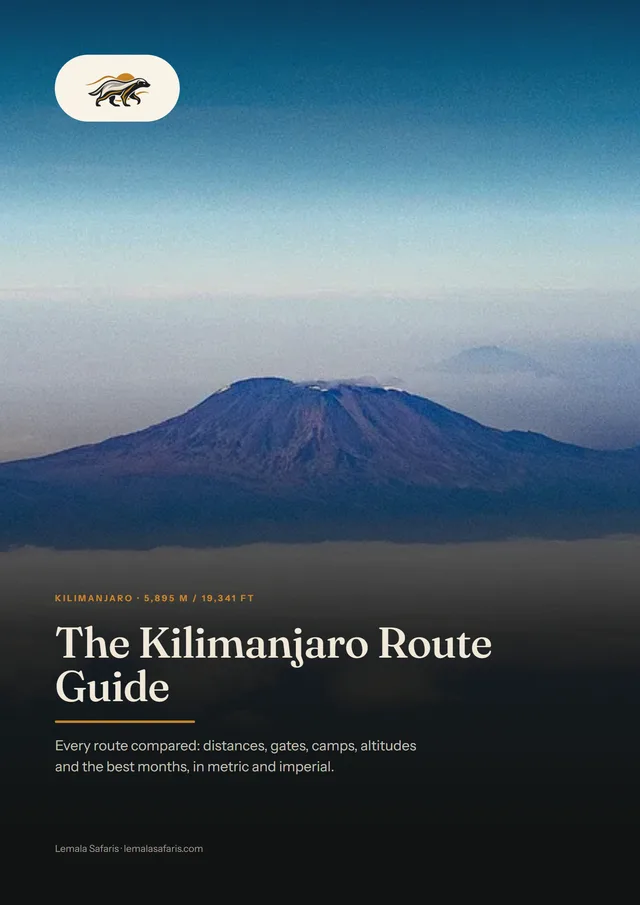
The Kilimanjaro Route Guide
Every route compared: distances, gates, camps, altitudes and the best months, in metric and imperial.
- Every route side by side: days, distance, start and finish gates, and where you sleep
- A day-by-day table for each route with elevation and distance, in metric and imperial
- The best months to climb, shown as a month strip for every route
 Free PDF
Free guide
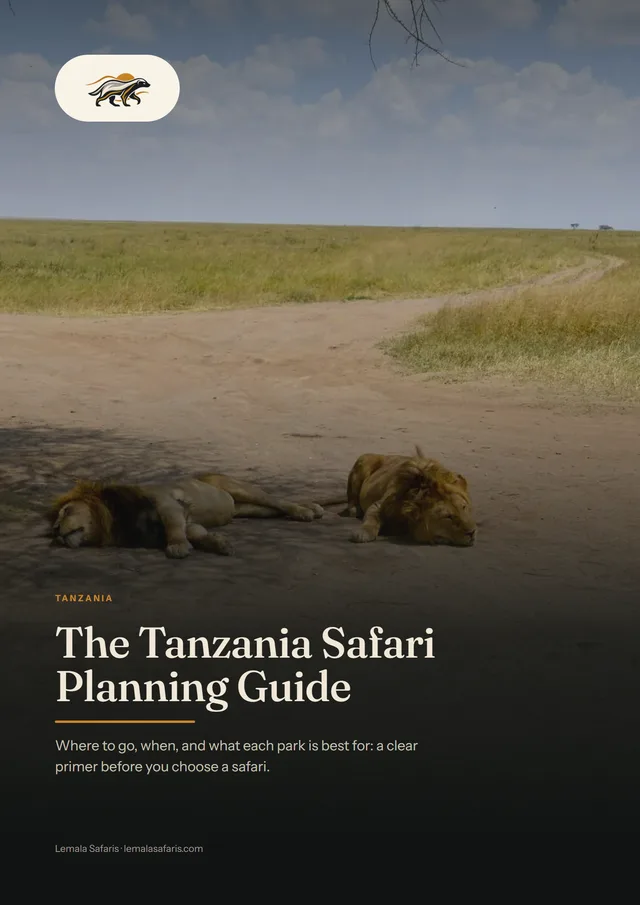
The Tanzania Safari Planning Guide
Where to go, when, and what each park is best for: a clear primer before you choose a safari.
- The best months for every park, park by park, on one page
- A profile of each destination: the landscape, the wildlife to expect and the size of the park
- The ways to travel, from classic game drives to walking, beach and combination trips
Your Kilimanjaro climb
Ready for the roof of Africa?
Tell us when you would like to climb and we will suggest the route and pace that give you the best chance of standing on Uhuru Peak.
No obligation and no pressure. We reply personally.
- 01
Tell us about your climb
When you would like to go, your group and any mountain experience. Two minutes is enough.
- 02
A real person replies
A Lemala planner suggests the route and pace that give you the best chance at the summit.
- 03
Get your tailored plan
A day-by-day plan and a clear quote, shaped around you. No obligation.