
Tarangire National Park · Ngorongoro Crater · Serengeti
Calving Season Photographers' Safari
Baobabs, a crater floor and three unhurried days on the Ndutu plains, paced around light and behaviour.
- Duration
- 7 days
- Destinations
- Tarangire National Park · Ngorongoro Crater · Serengeti
- Best months
- Jan, Feb, Mar
- Group size
- 1 to 6 guests
- From
- $4,697 per person
Overview
Baobabs, a crater floor and three unhurried days on the Ndutu plains, paced around light and behaviour.
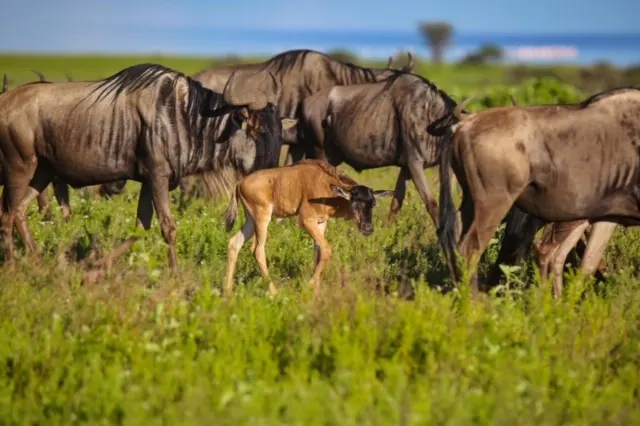
Seeing animals and being in the right place to photograph them are two different things, and this week is designed around the second. It covers three ecosystems, chosen for the shots each one makes possible: elephants moving under ancient baobabs in Tarangire, a Maasai encounter and a market-town walk at Mto wa Mbu, a descent into the Ngorongoro Crater and its closed world of nearly 30,000 animals, then three days on the open Ndutu plains while calving is under way. On a single day there, as many as 8,000 wildebeest calves can be born, and every predator nearby knows it.
The route suits two kinds of traveller who overlap more than you might expect: the photographer after a guide who studies light and animal behaviour with as much care as the track ahead, and the inquisitive traveller who prefers lingering in a handful of places to ticking off a long list of parks. It runs in two comfort levels over exactly the same seven days; only the camps beneath you change.
- Timed for the calving window, with up to 8,000 wildebeest calves born in one day across Ndutu and predators working the edges of the herds
- A full day among Tarangire's elephants, framed by baobabs more than a thousand years old
- A Maasai cultural visit and a walk through Mto wa Mbu, giving the wildlife days a human counterpoint
- The Ngorongoro Crater from rim to floor: an enclosed caldera of about 260 km², dense with animals and the region's best chance of black rhino
- Three whole days on the Ndutu plains, long enough for a scene to play out rather than flash past
- Guides who stay with a sighting while behaviour develops, instead of rushing to the next one
- Two comfort levels on an identical route, so the itinerary never bends to the budget
Best forSolo travellersCouplesWildlife enthusiastsPhotographers
Wildlife radar
What you can expect to see
Late January to March, when the short-grass plains of Ndutu fill with newborn wildebeest. Calving usually peaks in February, the moment newborns and predators are most densely packed together.
- WildebeestSeasonal
Ndutu calving, January to March
- African ElephantHigh
- Black RhinoRare
- CheetahHigh
- LionHigh
- Spotted HyenaHigh
The difference
Patience built into the plan
A conventional game drive keeps moving toward the next tick on the list. Here the vehicle parks, the engine goes quiet and the day is allowed to unfold: a newborn wildebeest wobbling to its feet, a cheetah studying a herd from a termite mound. That rhythm is written into the itinerary through three consecutive nights in the same Ndutu area, not left to luck.
Group size is kept deliberately small so everyone has real room to work, whether you carry a 600 mm lens or only a phone.
Along the way
Where the pictures happen
Tarangire
Large elephant herds, baobab silhouettes and the dry-season gathering of animals along the river.
Ngorongoro Crater
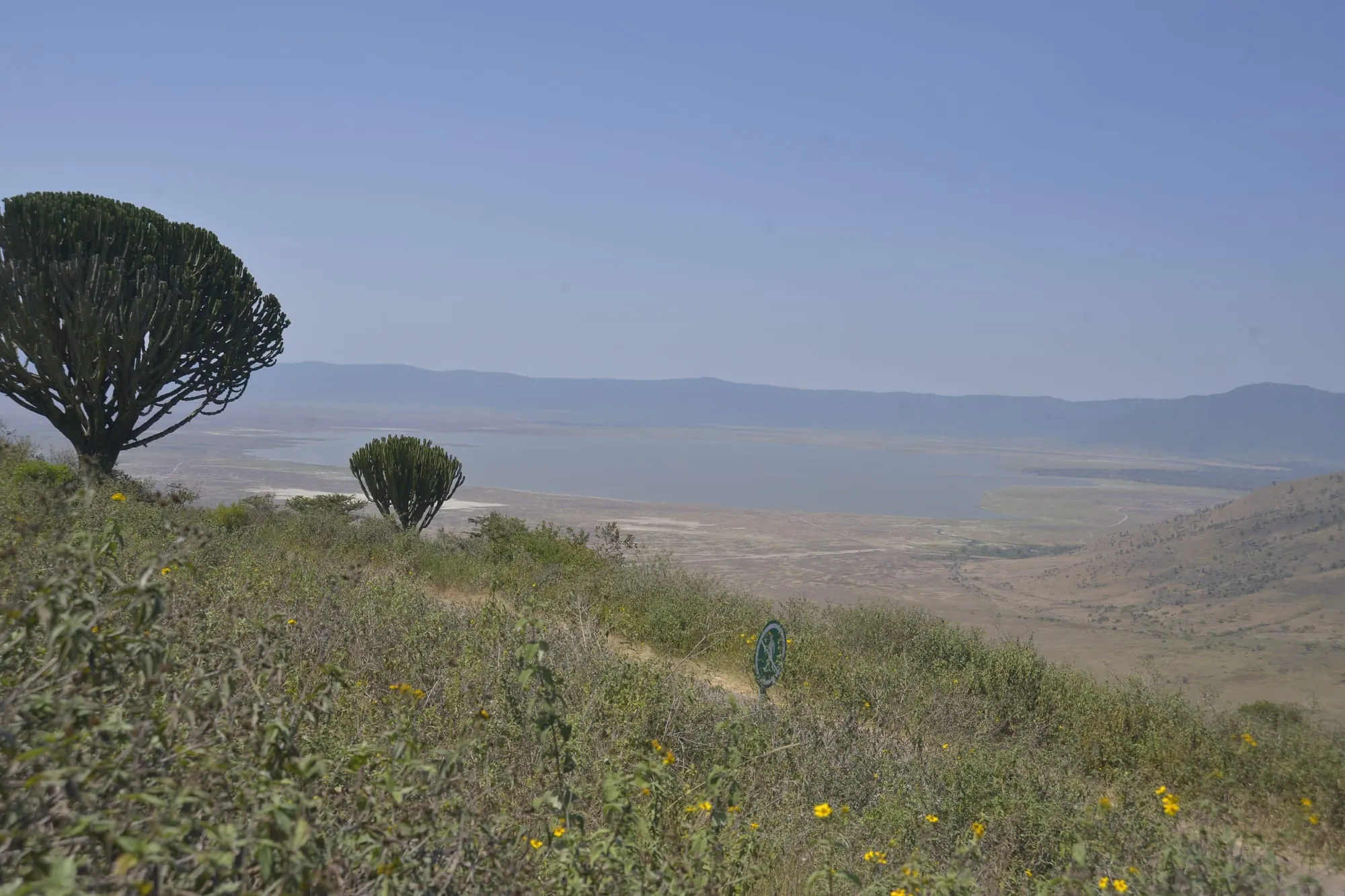
A walled caldera of roughly 260 km² with a soda lake, a floor full of grazers and some of the most dependable black rhino viewing around.
Ndutu plains
Open short grass and wide horizons during calving, with cheetah, lion, hyena and jackal hunting in full daylight.
On the map
Your route
Follow the trip from the first night to the last, by road and by air.
- Start · Day 1Arusha
- Day 2Tarangire National ParkDrive from Arusha
- Day 3Ngorongoro CraterDrive from Tarangire National Park
- Day 4-6NdutuDrive from Ngorongoro Crater
- End · Day 7ArushaDrive from Ndutu
Day by day
Your itinerary
Day 1
Landing in Arusha
Arusha
You touch down at Kilimanjaro International Airport and the first evening stays gentle. Over dinner your guide walks through the week: what the light does at each stop, and how the days will be paced once you reach the field.
- Ridge
- Gran Melia, Arusha
- Summit
- Arusha Coffee Lodge
- Meals
- Dinner
Day 2
South to Tarangire
Tarangire National Park
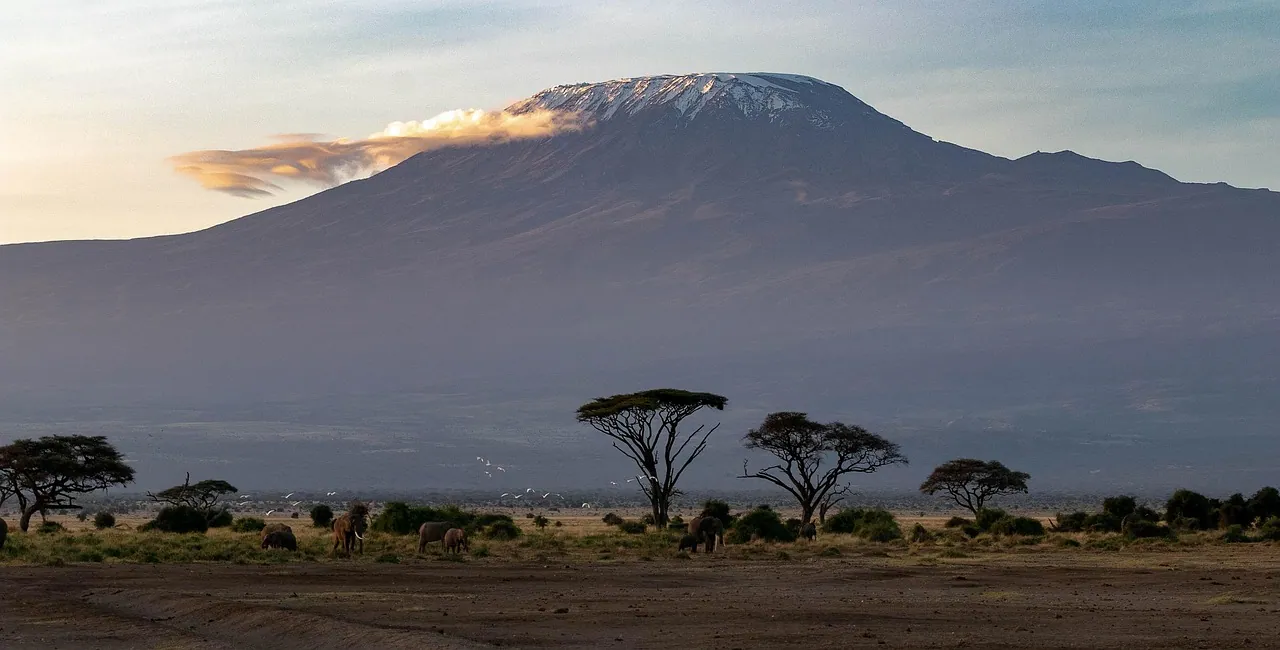
The road south opens onto plains dotted with baobabs, where Tanzania's biggest elephant herds gather around the last dependable water for miles. In the afternoon a Maasai cultural visit adds context to the landscape you are photographing.
Outside the wet season Tarangire holds one of the densest elephant populations in Africa, with herds drawn in along the river.
- Ridge
- Elephant Springs
- Summit
- Siringiti Tarangire Camp
- Meals
- Full Board
Day 3
Tarangire to the Ngorongoro highlands via Mto wa Mbu
Tarangire to Ngorongoro
You spend a last half-day in Tarangire, then climb toward the highlands. A stop in Mto wa Mbu, a market town beside the parks, includes a short guided walk that puts you among the people who live at the edge of these reserves.
- Meals
- Full Board
Day 4
Down into the crater, then on to Ndutu
Ngorongoro Crater to Ndutu
The morning is spent on the crater floor, among steep walls and thick wildlife, with a real shot at black rhino, a species the plains ahead cannot match for numbers. Later the drive continues into the Ndutu ecosystem.
The crater is a closed ecosystem about 260 km² across, and its black rhino sightings are among the most reliable in the region.
- Ridge
- Masek Tented Lodge
- Meals
- Full Board
Day 5
A full day on Ndutu
Ndutu, southern Serengeti ecosystem
The plains, not a script, set the agenda. Expect short grass, long sightlines and, if the timing works out, tender scenes of wildebeest calves standing and running only minutes after birth. Your guide holds position rather than hurrying off, because the best stories take time.
At the height of calving, up to 8,000 wildebeest calves can arrive across the Ndutu plains in a single day.
- Ridge
- Masek Tented Lodge
- Meals
- Full Board
Day 6
Predators on the margins
Ndutu, southern Serengeti ecosystem
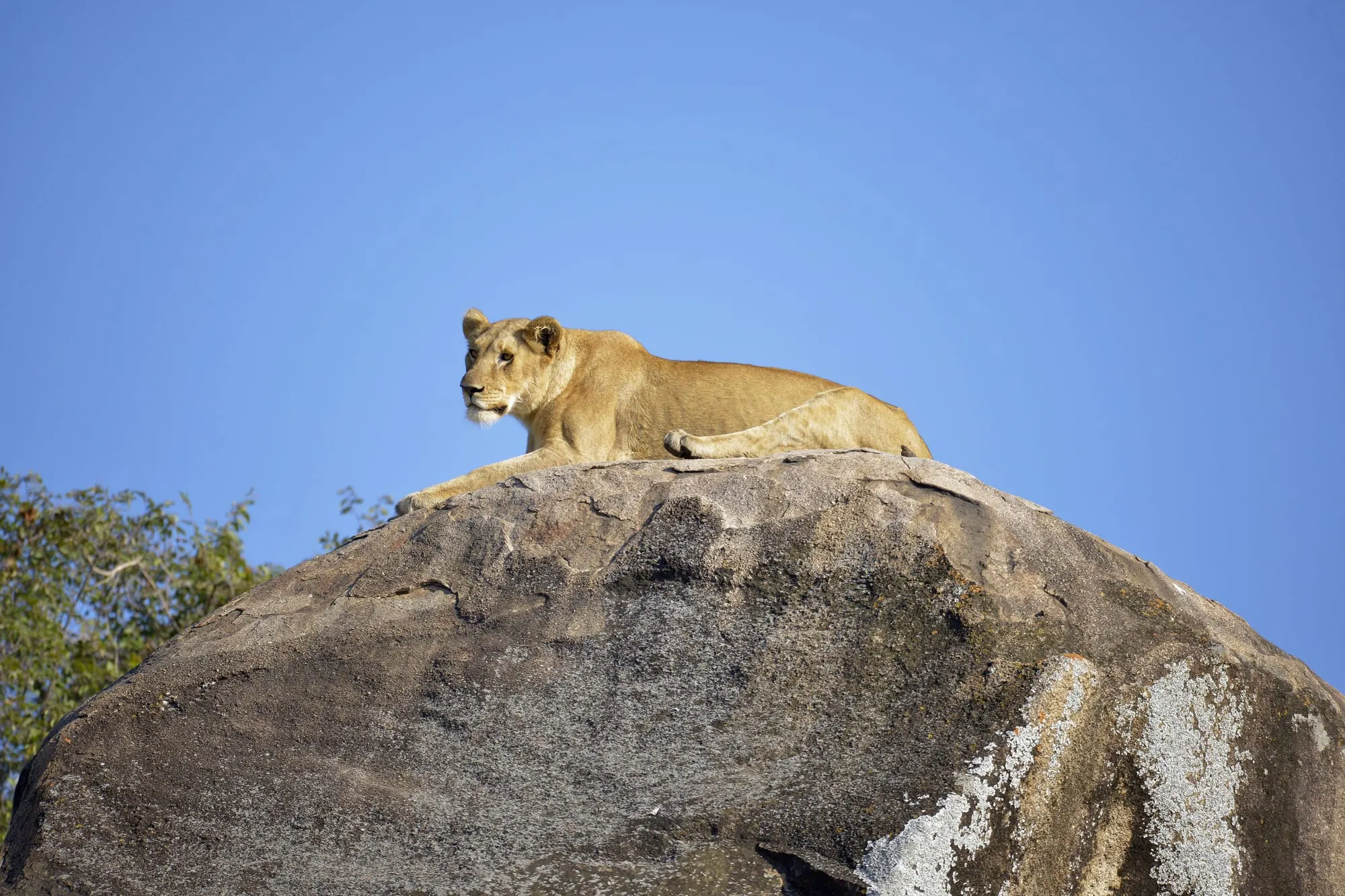
Where newborns are this plentiful, hunters gather. Around the fringes of the herds you find cheetah, lion, hyena and jackal, all hunting in broad daylight, so today is about behaviour at close range, not distant specks.
Calving time brings some of the year's strongest cheetah activity to Ndutu, with hunts played out across open ground.
- Ridge
- Masek Tented Lodge
- Meals
- Full Board
Day 7
Last light, then back to Arusha
Southern Serengeti to Arusha
One more morning on the plains, then the drive back to Arusha and the airport. Dust on your boots, and a memory card holding a different sort of safari story.
- Meals
- Breakfast
Gallery
Along the route
Where you stay
Choose your style of stay
Ridge
Character, comfort and standout settings
From$4,697per person
- Gran Melia, Arusha
- Elephant Springs
- Ngorongoro Lion's Paw
- Masek Tented Lodge
Summit
Exclusive, refined and luxurious
From$6,560per person
- Arusha Coffee Lodge
- Siringiti Tarangire Camp
- Ngorongoro Lodge, The Rim Room (Meliá Collection)
- Siringiti Migration Camp, Ndutu Site
Price per person
Choose a level of stay and see what each person pays for your group size.
| Travelling together | Price per person |
|---|---|
| 1 traveller | $7,843 |
| 2 travellers | $5,487 |
| 3 travellers | $5,092 |
| 4 travellers | $4,895 |
| 5 travellers | $4,776 |
| 6 travellers | $4,697 |
- Prices are in US dollars, per person sharing a double or twin room. Vehicle and guide costs are shared, so the price per person changes with group size and does not always fall in a straight line.
- Park fees are set by the authorities and can change, so the quote you accept is the price that applies.
What's included
- Every park, concession and conservation area fee
- Safari vehicle, guide and fuel on all field days
- All meals
- Accommodation as set out in the itinerary
- Airport transfers
Not included
- International flights
- Visa fees
- Travel insurance
- Gratuities
- Camera and lens hire
Good to know
- Rates are per person sharing a twin or double room. A single-traveller rate is available on request.
- The trip is tailor-made to your dates, and groups stay small so everyone has proper working space.
- Lodging and rates depend on availability and may shift with the exact travel date.
- The Tanzanian government sets all park and conservation charges, and these may be revised without prior warning.
Questions
Good to know
Yes. Whether you bought your first DSLR last month or shoot for a living, the programme works for you. Your guides share practical tips on where to sit and when to shoot as the days unfold, and it never turns into a lesson.
Mostly in pace and intent. Standard drives keep chasing the next animal; here the vehicle stays put while a scene develops, whether that is a newborn calf finding its feet or a cheetah scanning a herd from a mound.
The main window runs from about late January through March. Numbers of newborns and predator activity both tend to peak in February.
Bring a mirrorless or DSLR camera, a lens from wide to mid-range for landscapes, and a telephoto reaching 400 mm or more. A 500 to 600 mm lens rewards you with distant subjects, and a 70-200 mm covers closer encounters. A fuller packing guide goes out to confirmed guests before departure.
The trip is arranged around your dates with a deliberately small group. Ask us about the exact cap and private-departure options.
Yes. Vehicle, guide and fuel costs are split between travellers, so the cost per person falls as the group grows.
It covers all park, concession and conservation fees, vehicle, guide and fuel on every field day, all meals, the accommodation listed and airport transfers. International flights, visas, insurance, gratuities and camera or lens hire are extra.
Yes. A few beach days in Zanzibar make a natural finish, and the route can also be paired with a northern safari if you want river-crossing season as well as calving.
Calving Season Photographers' Safari
Tell us your dates and group size and we will confirm availability and a personal quote.