Kilimanjaro resources
How much does it cost to climb Kilimanjaro?
Real prices for each of our six routes by group size, what the price includes, what it does not, and why the cheapest climb is rarely the best value.
- 6 routes
- Priced by group size
- Park fees
- Included, with rescue and conservation levy
- 1 porter each
- Per trekker, with a 15 kg duffel limit
- Oxygen
- Emergency bottled oxygen carried with the team
The short answer
The cost of a Kilimanjaro climb depends on the route, the number of days and how many climbers share the crew and park costs. The table below lists our price per person for each of the six routes, for a solo climber, a small group of two to four, and a group of five or more. The more climbers who share, the lower the price for each.
A Kilimanjaro climb follows its own logic and is worth treating separately from a safari. Park fees are charged per person per day on the mountain, so a longer route costs more simply because you spend more days inside the park. On top of that sits the crew: guides, a cook and porters, with fair wages, sensible loads, proper kit and good food.
Kilimanjaro prices by route and group size
Our price per person for each route, in US dollars. Choose the route and the number of days, and your personal quote confirms the exact price for your dates.
| Route | Duration | Solo climber | Small group (2 to 4) | Group (5 or more) |
|---|---|---|---|---|
| Machame Route | 6 or 7 days | $2,545 | $2,345 | $2,200 |
| Lemosho Route | 6, 7 or 8 days | $3,050 | $2,850 | $2,695 |
| Marangu Route | 5 or 6 days | $2,395 | $2,195 | $2,050 |
| Rongai Route | 7 days | $2,695 | $2,495 | $2,350 |
| Umbwe Route | 6 or 7 days | $1,980 | $1,980 | $1,980 |
| Northern Circuit | 8, 9 or 10 days | $2,690 | $2,690 | $2,690 |
Prices in US dollars, per person. The more climbers who share the crew and park costs, the lower the price for each.
What is included in the climb price
On our tented routes the price includes the following.
Included
- Kilimanjaro National Park entry, camping and rescue fees, plus the conservation levy
- A lead mountain guide who speaks English, with one assistant guide for every three trekkers
- One porter per trekker, carrying a duffel capped at 15 kg
- A mountain cook preparing hot meals at every camp, full board throughout
- Four-season sleeping tents, foam mats, a dining tent, a kitchen tent and a private toilet tent
- Emergency bottled oxygen carried with the team
- Pulse oximeter checks morning and evening at each camp
- A guide trained in wilderness first response
- Airport and hotel transfers, and the drive to and from the trailhead
- Summit certificate for everyone who reaches the top
- VAT and all Tanzanian taxes that apply
Not included
- International flights
- Tanzania entry visa
- Personal travel and medical insurance, which is compulsory for this trek
- Personal trekking gear and clothing
- Gratuities for the mountain crew
What drives the cost of a Kilimanjaro climb
Park fees and days on the mountain
Park fees cover entry, camping or hut charges, rescue and a conservation levy, charged per person per day. A longer route therefore costs more because you spend more days inside the park.
The crew
Every climber is supported by guides, a cook and porters. The ratio of crew to climbers is one of the clearest signs of a responsible operator, and fair wages, sensible loads, proper kit and good food for the crew cost money.
Route and number of days
More days give your body more time to acclimatise, and seven or eight days gives most people a better chance of reaching the top than six. A cheaper, shorter climb that ends below the summit is poor value.
Safety
Emergency oxygen, daily oxygen readings and a guide trained in wilderness first response are not where to cut costs. Ask every operator what is included.
Group size
Crew and park costs are shared, so a small group pays less per person than a solo climber, and a larger group less again.
Extras
A safari or a few days on the Zanzibar coast after the climb is a popular reward. Gratuities for the mountain crew are separate from the price.
Why the cheapest Kilimanjaro climb is rarely the best value
When a price is far below the others, the saving usually comes from the crew, the safety equipment or the days. Ask how many guides, how many porters per climber, what loads they carry, how oxygen levels are checked and whether emergency oxygen travels with the team. Honest operators welcome these questions.
Tipping and other costs to plan for
Gratuities for the mountain crew are customary and are handled separately from the climb price. We share guidance on how and when to tip before you travel, so you can bring the right notes. Allow too for personal gear, insurance that covers trekking to 6,000 m with evacuation and medical care, your visa and international flights.
Questions answered
What travellers ask us
It depends on the route, the number of days and your group size. The table above shows our price per person for each of the six routes for a solo climber, a small group of two to four and a group of five or more.
Shorter routes cost less, because park fees are charged per person per day. But a shorter climb gives your body less time to acclimatise, so the cheapest route is not always the best value. See the table above and our route comparison.
Yes. Kilimanjaro National Park entry, camping and rescue fees, plus the conservation levy, are included on our tented routes.
International flights, the Tanzania entry visa, personal travel and medical insurance, personal trekking gear and clothing, and gratuities for the mountain crew.
Gratuities for the mountain crew are customary and are handled separately from the price. We share guidance on how and when to tip before you travel.
Yes. Crew and park costs are shared, so a small group of two to four pays less per person than a solo climber, and a group of five or more pays less again.
Yes. Plenty of climbers pair the mountain with a wildlife safari or a few days on the coast. Tell us early so we can order the pieces well, with the mountain first and the rest as a reward.
Keep planning
Where to go next
Compare the six routes
Machame, Lemosho, Marangu, Rongai, Umbwe and the Northern Circuit.
Read moreDifficulty and success rate
How hard it really is, and what improves your chances.
Read moreTanzania safari cost
What a safari costs, in case you add one to your climb.
Read moreTalk to a planner
Get a personal quote for your route and dates.
Read more
Free guides
Plan your climb with our free guides
Read the routes side by side and plan your trip at your own pace. Tell us where to send them and they arrive in your inbox.
 Free PDF
Free guide
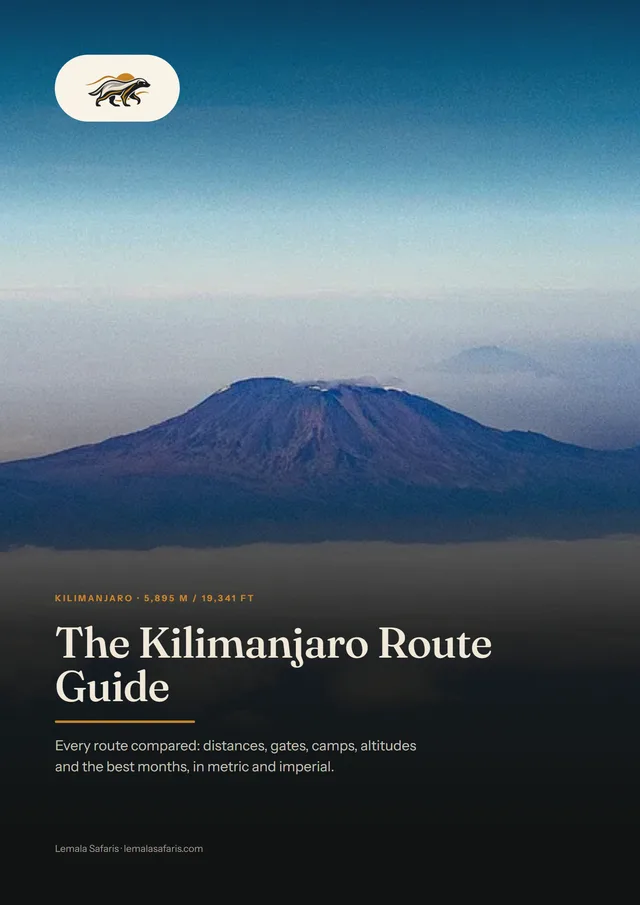
The Kilimanjaro Route Guide
Every route compared: distances, gates, camps, altitudes and the best months, in metric and imperial.
- Every route side by side: days, distance, start and finish gates, and where you sleep
- A day-by-day table for each route with elevation and distance, in metric and imperial
- The best months to climb, shown as a month strip for every route
 Free PDF
Free guide
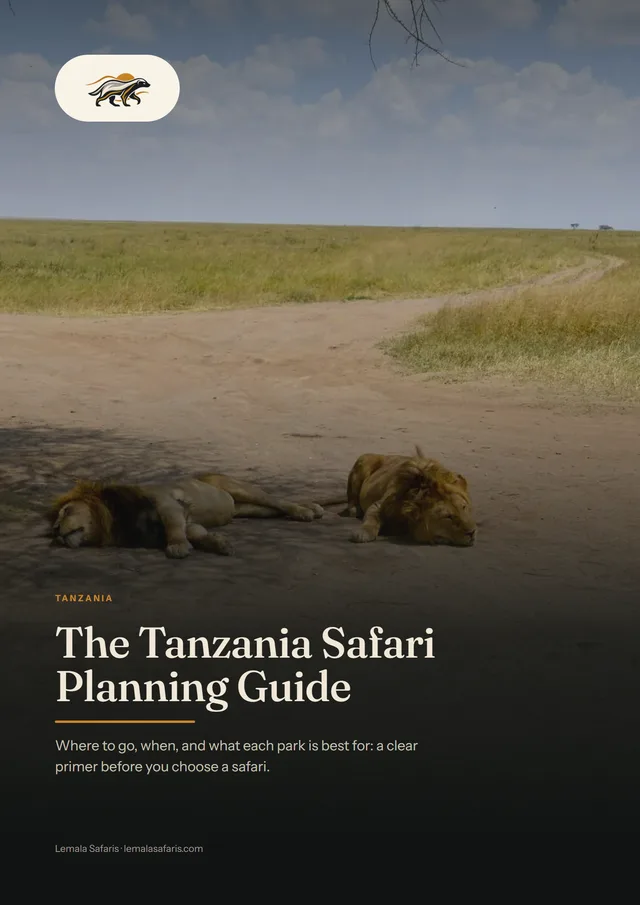
The Tanzania Safari Planning Guide
Where to go, when, and what each park is best for: a clear primer before you choose a safari.
- The best months for every park, park by park, on one page
- A profile of each destination: the landscape, the wildlife to expect and the size of the park
- The ways to travel, from classic game drives to walking, beach and combination trips
Your Kilimanjaro climb
Ready for the roof of Africa?
Tell us when you would like to climb and we will suggest the route and pace that give you the best chance of standing on Uhuru Peak.
No obligation and no pressure. We reply personally.
- 01
Tell us about your climb
When you would like to go, your group and any mountain experience. Two minutes is enough.
- 02
A real person replies
A Lemala planner suggests the route and pace that give you the best chance at the summit.
- 03
Get your tailored plan
A day-by-day plan and a clear quote, shaped around you. No obligation.