
Tarangire National Park · Ngorongoro Crater · Serengeti
10-Day Slow-Light Photographic Safari
Small groups, spare seats and long stops in elephant, crater and big-cat country.
- Duration
- 10 days
- Destinations
- Tarangire National Park · Ngorongoro Crater · Serengeti
- Best months
- Jun, Jul, Aug, Sep, Oct
- Group size
- 1 to 6 guests
- From
- $4,697 per person
Overview
Small groups, spare seats and long stops in elephant, crater and big-cat country.
Plenty of safaris run on a quick rhythm: one sighting, a handful of frames through a window, then off to the next. This one reverses that. It is paced so that you can actually make the photograph, with room to move and time to wait for it.
Across ten days the route covers four of northern Tanzania's richest landscapes. It opens with elephant herds and baobabs in Tarangire, gives a full day to the busy floor of the Ngorongoro Crater, then climbs onto the central Serengeti plains, among the most dependable big-cat country on the continent. It finishes in the north, where the horizon runs on and the evening light turns gold. Each day is planned around light, position and patience, not a list of parks to tick off.
Groups stay small, so every photographer has a row of seats and space for a long lens. Your guide is trained in photographic positioning: they think about where the light will fall as well as where the animals are. Whether you have shot wildlife for decades or are carrying a new camera on your first big trip, you leave with images you are proud of, not just phone snapshots.
- Time and vehicle space to compose each scene instead of snapping and driving on
- A small photography-led group rather than a mixed-interest safari
- Four distinct photographic settings in one trip: elephants and baobabs, crater density, central Serengeti predators and the migration's northern range
- Practical coaching in the field on position, light and camera settings
Best forPhotographers of every levelWildlife enthusiastsSolo travellers
Wildlife radar
What you can expect to see
June to October brings the driest light and the biggest elephant gatherings in Tarangire. Late June to September is the strongest stretch for migration activity and possible river crossings in the northern Serengeti.
- African elephantHigh
- LionGuaranteed
- LeopardHigh
- CheetahHigh
- Black rhinoRare
- WildebeestSeasonal
The difference
Built around the frame, not the sighting count
A general safari is organised around seeing wildlife. This one is organised around photographing it, and that shapes the whole day.
Vehicles are placed for light and angle, so you may approach a scene from an unexpected side to get the sun right. A stop lasts as long as the picture needs. If a pride looks ready to move, you wait. Your guide is also watching where the light will fall twenty minutes from now, where the background will clear and when it is worth holding position instead of answering the next radio call.
If you have never joined a photography-led safari, the difference shows quickly: less hurrying, more looking.
Along the way
Photography highlights
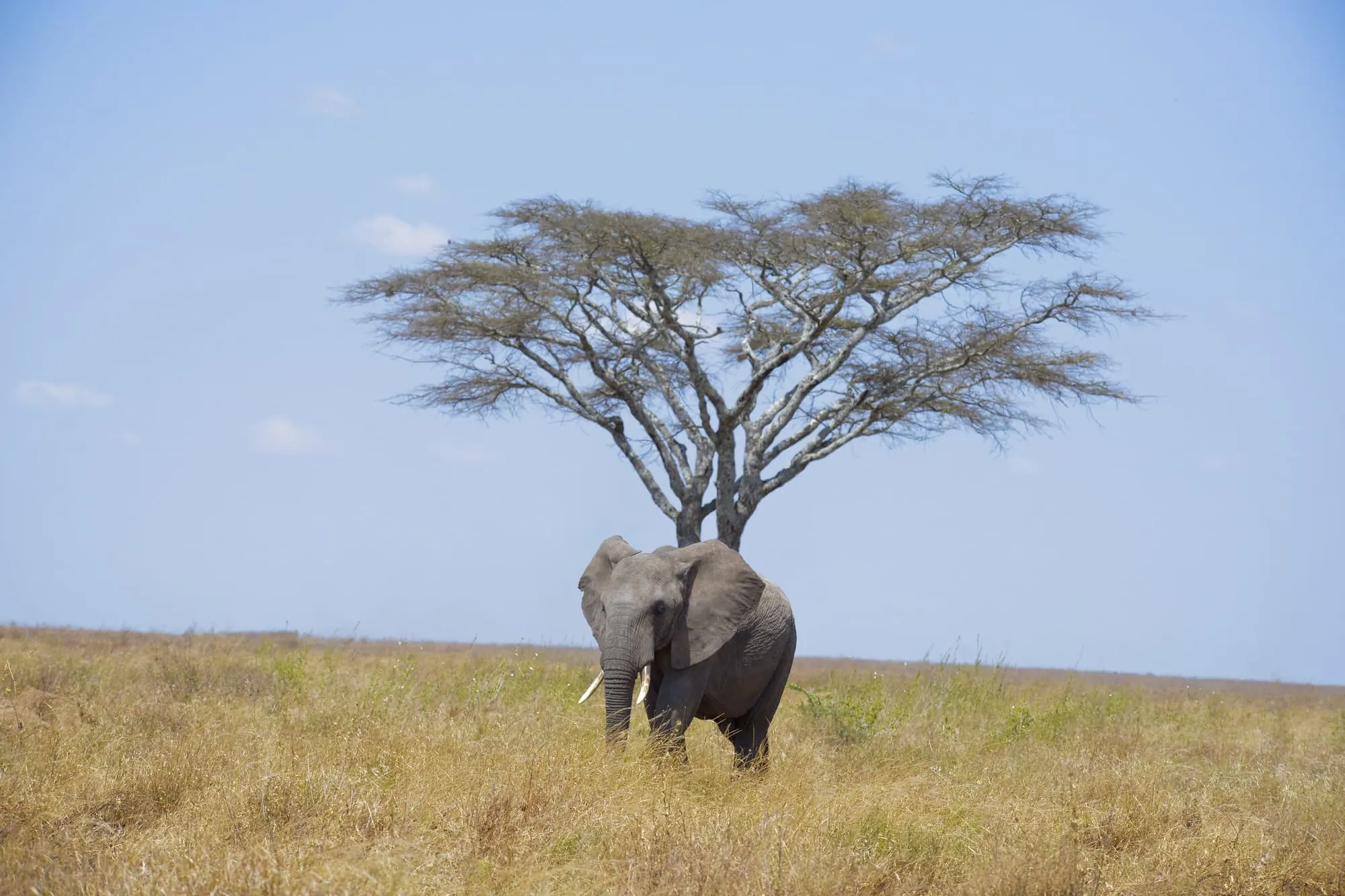
Tarangire: elephants and baobabs
The safari opens gently here. Big herds move among baobabs whose silhouettes fill a memory card by themselves, and dry-season dust hangs gold in the late afternoon. It suits wide landscape frames as much as close portraits, so it is worth setting the long lens down now and then to photograph the setting the elephants live in.
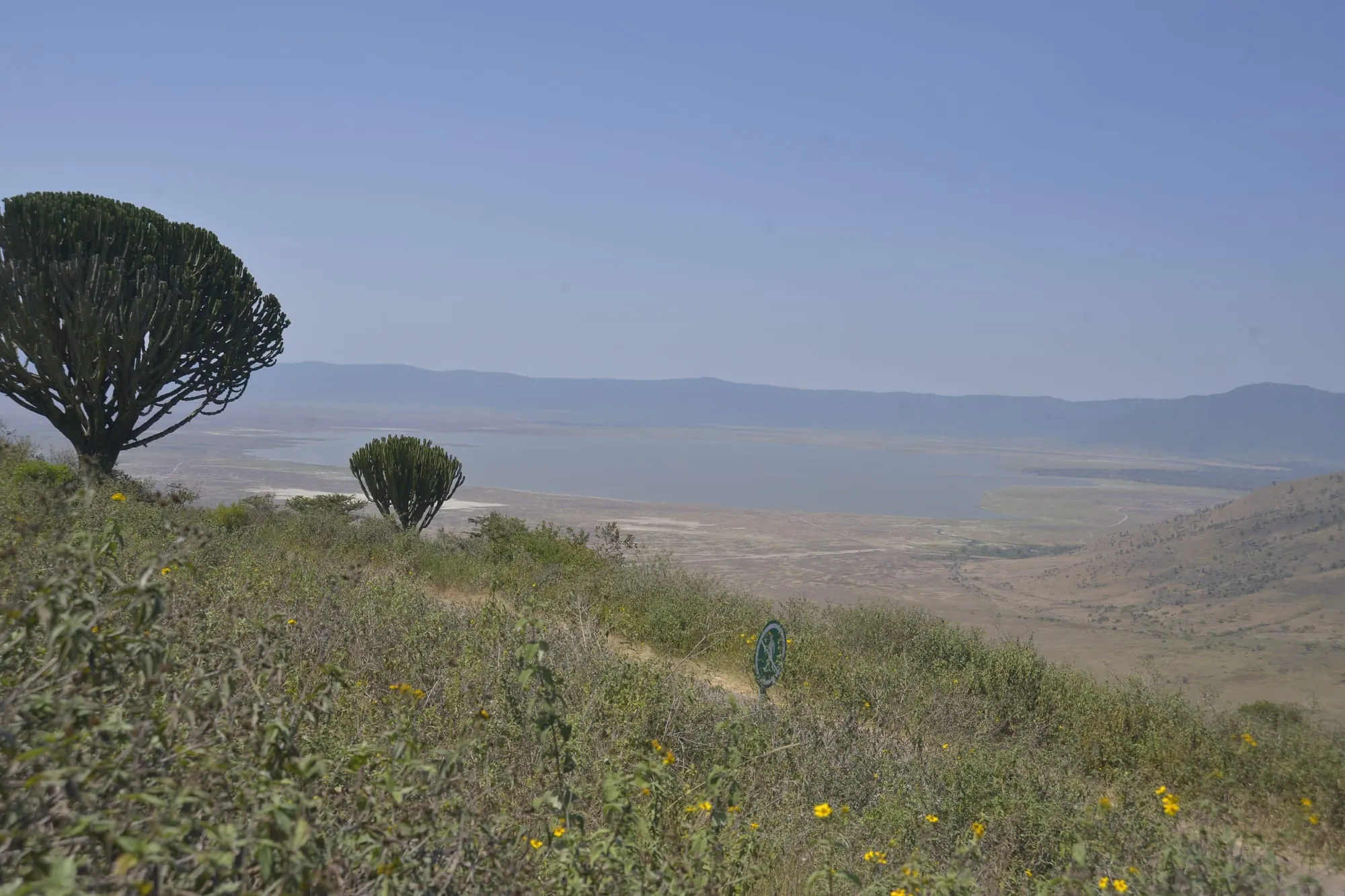
Ngorongoro Crater: density and drama
On the crater floor you rarely need to search. Lion, elephant, buffalo, hyena, flamingo and, with luck, endangered black rhino share one compact, dramatic bowl. For newcomers it is often the day confidence arrives. For experienced shooters it is a day when the real challenge is deciding which subject deserves the shutter.
Central Serengeti: predators
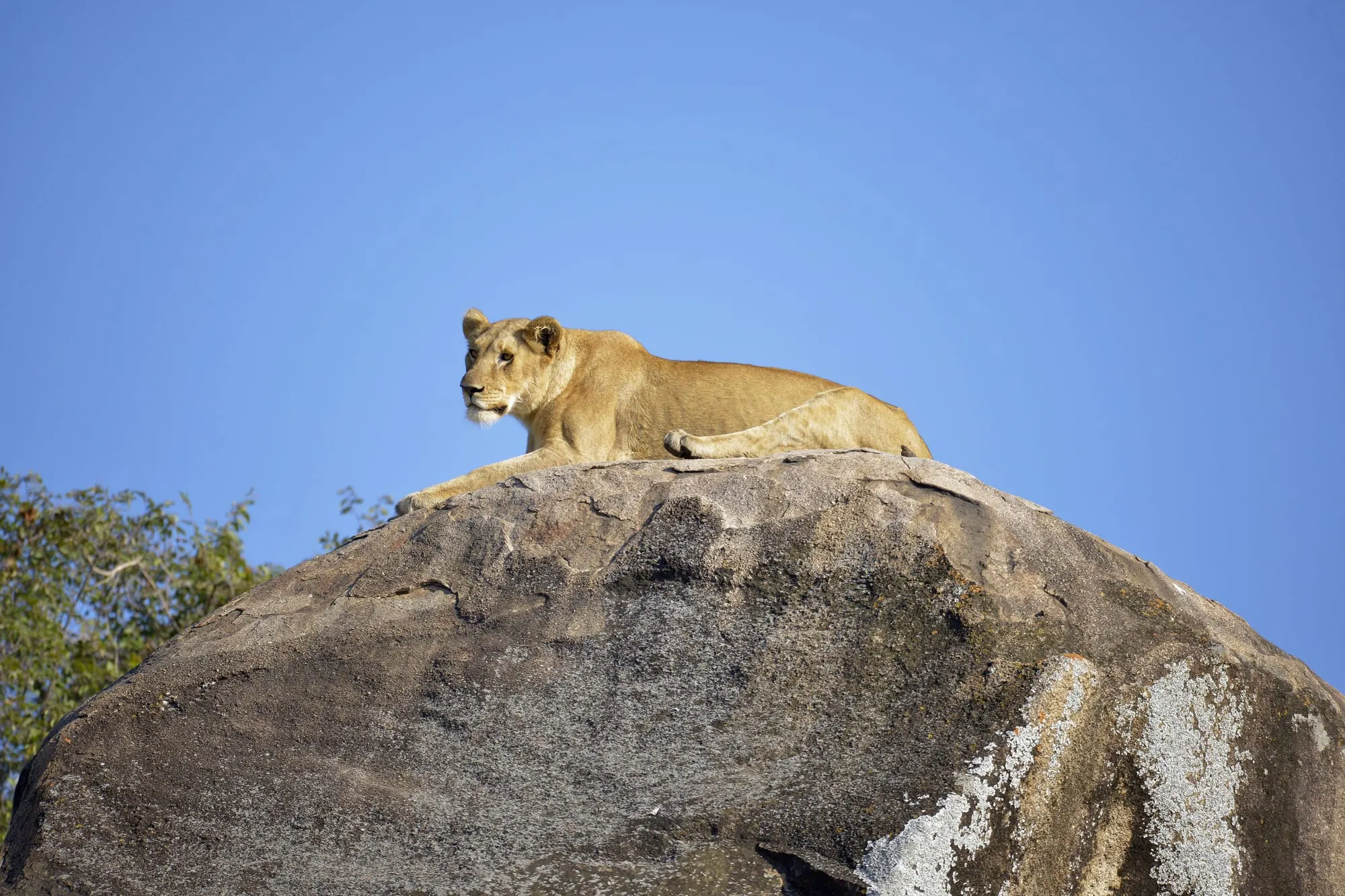
This is Tanzania's most dependable big-cat country, and the section of the trip that rewards patience most. Kopjes, open plains and woodland edges give repeat chances at lion, leopard and cheetah, and at behaviour rather than a distant shape in the grass: a leopard climbing down from its tree, cubs wrestling in the shade, a cheetah surveying the horizon before a chase.
Northern Serengeti: migration country
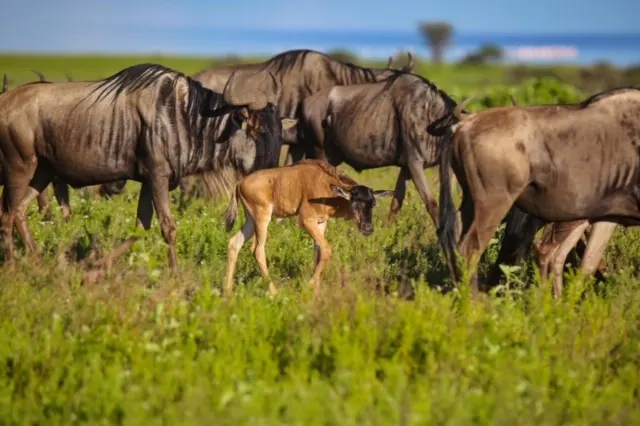
The wildest and widest stretch of the route. Timing permitting, your frames could include wildebeest gathering along a river, the held breath ahead of a crossing, or hunters trailing the herds beneath enormous skies. Crossings cannot be promised, but the light and scale are striking even on a quiet day.
Kit to bring
We suggest a DSLR or mirrorless camera, a wide-to-mid lens for scenery and context, and a long lens reaching 400mm or beyond. Anything from 500 to 600mm excels on faraway subjects and tightly compressed portraits, while a 70-200mm suits nearby sightings and storytelling frames shot from the vehicle. Professional gear is not required. Confirmed guests receive a packing and gear guide matched to their equipment before departure.
On the map
Your route
Follow the trip from the first night to the last, by road and by air.
- Start · Day 1Arusha
- Day 2-3Tarangire National ParkDrive from Arusha
- Day 4-5Ngorongoro CraterDrive from Tarangire National Park
- Day 6-7Central SerengetiDrive from Ngorongoro Crater
- Day 8-9Northern SerengetiDrive from Central Serengeti
- End · Day 10ArushaDrive from Northern Serengeti
Day by day
Your itinerary
Day 1
Arrival in Arusha
Arusha
Land at Kilimanjaro International Airport and ease into Arusha before the safari begins. Over dinner your guide runs through the route and talks about your kit, your experience and what you hope to bring home. First-timers can ask everything they have been saving up, and seasoned photographers can start shaping the trip to how they work.
Give your guide any shot list now, whether a species, a behaviour or a style of composition, so the route can bend towards it from the first day.
- Ridge
- Kahawa House
- Summit
- Gran Melia, Arusha
- Meals
- Dinner
Day 2
Tarangire National Park
Tarangire National Park
The first of two days finding your feet in elephant and baobab country. Expect dust glowing in late light, elephants moving without hurry between the trees, and room to try both sweeping landscapes and close portraits before the pace picks up.
Backlit dust is a Tarangire signature. In the late afternoon, shoot towards the sun rather than away from it.
- Ridge
- Burunge Tented Lodge
- Summit
- Siringiti Tarangire Camp
- Meals
- All meals
Day 3
Tarangire National Park, second day
Tarangire National Park
A second day in the park to revisit what worked and refine it, with the same unhurried elephants and baobab plains and the same warm afternoon light.
Some Tarangire baobabs are well over a thousand years old. Use a wide lens to put the whole silhouette against open sky.
- Ridge
- Burunge Tented Lodge
- Summit
- Siringiti Tarangire Camp
- Meals
- All meals
Day 4
Up to the Ngorongoro highlands
Ngorongoro Crater
Today is gentler and shorter, climbing out of Tarangire's lowlands toward the highlands. Over the evening your guide briefs you on tomorrow's descent: what the light is likely to do, the rhythm of the hours ahead, and which gear should be within reach before the park gates swing open.
Down on the crater floor the air stays a few degrees colder than up on the rim, even around noon. Numb fingers fumble lens swaps, so pack gloves where you can grab them for the first drive down.
- Meals
- All meals
Day 5
A full day on the crater floor
Ngorongoro Crater
An early start and a whole day in one of the most densely stocked wildlife settings on the continent. The question is less where the animals are than which to point at next: lions on open grass, elephants against the walls, flamingos in a pink band along the soda lake.
The enclosing walls change how light behaves. Shadows soften later in the morning than they do on open plains.
- Meals
- All meals
Day 6
Central Serengeti, first day
Central Serengeti
Two unhurried days in the part of Tanzania with the best predator viewing in any season. Patience pays here: staying with a pride until something happens, anticipating a leopard's likely path back to its kill, waiting while a cheetah studies the plains before it runs. Kopjes, grassland and woodland offer plenty of varied backdrops.
Check kopjes at first light. Lions and leopards often use the warm rock as a lookout before the heat builds.
- Summit
- Siringiti Serengeti Camp
- Meals
- All meals
Day 7
Central Serengeti, second day
Central Serengeti
A second day with the cats, returning to the places that held promise yesterday and using what you learned about light and timing.
A hunting cheetah is much less bothered by a vehicle that sits motionless with its engine switched off than by one that keeps shuffling for position. Holding still also gives you sharper images.
- Summit
- Siringiti Serengeti Camp
- Meals
- All meals
Day 8
Northern Serengeti, first day
Northern Serengeti
Two days spent in the most untamed, expansive stretch of the route. Where the herds happen to be decides how it unfolds: one afternoon could be spent beside wildebeest crowding anxiously at a river, another simply absorbing open plains beneath a sky with no edge. Nothing is promised, yet even the quiet moments have weight.
A tense, tightly packed herd at the bank is usually the best sign that a crossing may be near. Your guide reads their body language before placing the vehicle.
- Ridge
- Mara Under Canvas
- Meals
- All meals
Day 9
Northern Serengeti, second day
Northern Serengeti
A final full day in the north, working the river country and the open plains in the best light of the morning and evening.
When chasing action it is easy to forget the wide landscape. Reserve a handful of shots for the sheer breadth of the plains themselves.
- Ridge
- Mara Under Canvas
- Meals
- All meals
Day 10
Return to Arusha and departure
Arusha
One last morning in the field with cameras out until the final minute, after which the road leads back through Arusha to Kilimanjaro International Airport and your journey home. Ten days, four landscapes and a card of files you will be sorting for weeks.
- Meals
- Breakfast
Gallery
Along the route
Where you stay
Choose your style of stay
Ridge
Character, comfort and standout settings
From$4,697per person
- Kahawa House
- Burunge Tented Lodge
- Ngorongoro Serena Safari Lodge
- Kubukubu Tented Lodge
- Mara Under Canvas
Summit
Exclusive, refined and luxurious
From$5,792per person
- Gran Melia, Arusha
- Siringiti Tarangire Camp
- Ngorongoro Lodge, The Rim Room (Meliá Collection)
- Siringiti Serengeti Camp
Price per person
Choose a level of stay and see what each person pays for your group size.
| Travelling together | Price per person |
|---|---|
| 2 travellers | $6,656 |
- Prices are in US dollars, per person sharing a double or twin room.
- High season runs from June to September and from December to February; low season covers the other months.
- Priced for two travellers sharing. For one traveller, or three or more, we quote on request.
- These rates are indicative. We confirm the exact price for your dates and group in your personal quote.
- Park fees are set by the authorities and can change, so the quote you accept is the price that applies.
What's included
- All park, concession and conservation area fees
- Vehicle, guide and fuel on every game-drive day
- Airport transfers
- Drinking water
- Meals as listed day by day
- Accommodation for your guide
- Emergency medical evacuation cover
Not included
- International flights
- Visa fees
- Travel insurance
- Gratuities
- Camera and lens rental
Good to know
- Rates are quoted per person on a twin-share basis.
- Your deposit confirms the booking and the balance is due before you travel. The amounts and dates are set out in your personal quote and invoice.
- This route is built around the northern Serengeti migration camps, which operate roughly from June to October. A departure outside that window would use a different routing around Ndutu.
- Accommodation and rates depend on availability and can vary with the exact dates inside the season.
- Government park and conservation fees are set by the authorities and can change without notice.
Questions
Good to know
No. The trip suits every level. Coaching in the field is practical and adjusts to where you are, whether this is your first serious wildlife trip or you already know your equipment inside out.
Park and conservation fees, game drives with vehicle, guide and fuel, meals as listed, drinking water and airport transfers are all included. Flights, visas, insurance, gratuities and camera hire are not. Ask for a personal quote for your dates and chosen accommodation tier. Prices vary with the season and the accommodation level you choose, so we quote for your exact dates.
Pacing, vehicle placement and time at each sighting are all set by photography first. Stops are longer, the approach is more patient, and the guiding focuses on light and composition as well as finding animals.
Departures are arranged around your dates, with deliberately small numbers so each photographer has proper working space. Groups are kept small, and a fully private departure for your own party can be arranged on request.
June to October offers the driest light and the largest elephant numbers in Tarangire. Late June to September is the best window for migration activity and possible river crossings in the northern Serengeti.

10-Day Slow-Light Photographic Safari
Tell us your dates and group size and we will confirm availability and a personal quote.